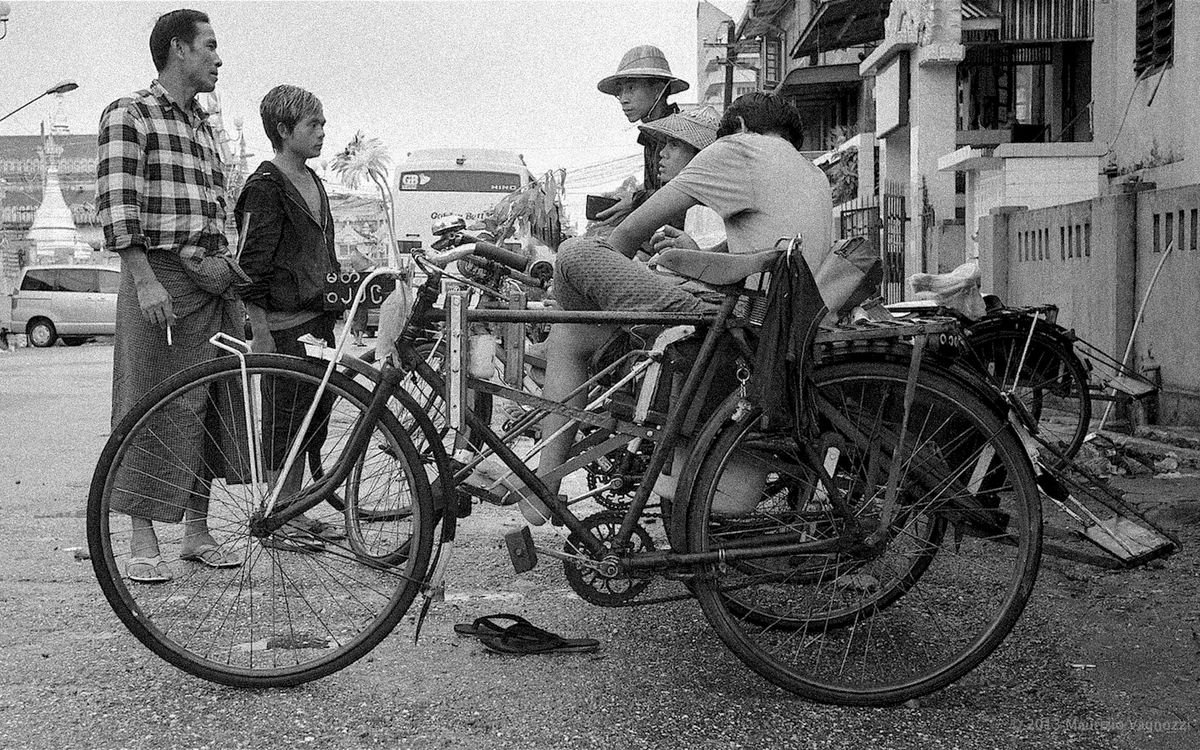
In this image from 2013, taken in Myanmar with my
Leica M7and Kodak Tmax400, there is everything that makes travel photography an act of witnessing — the meeting of lives, the pauses between movements, the slower rhythm of a country that at the time felt suspended outside of time.
The group of men gathered around the trishaws reflects a simple everyday
life, shaped by modest work and brief exchanges between one ride and the next. Their gestures — one holding a cigarette, another leaning on the seat, someone sitting in a precarious balance on the side of the vehicle — form an unplanned, genuine choreography. The bicycles themselves feel like characters: heavy, worn, occupying the foreground with authority. Their scratches, ropes, and improvised repairs tell the passage of time as clearly as the faces.
The black and white adds a layer of
melancholy, a grain that seems to carry the dust and humidity of the tropics. It is as if the frame breathes the air of Yangon: slow traffic, distant horns, the metallic rattle of pedals.
But what stands out most is the naturalness of the scene. No one is posing; no one seems aware of the camera. You stepped quietly into their space and allowed the scene to unfold on its own — and that is where the power of reportage lies: in the honesty of a moment lived rather than stolen, and in the ability to convey dignity, rhythm, and truth in a fragment of everyday life.
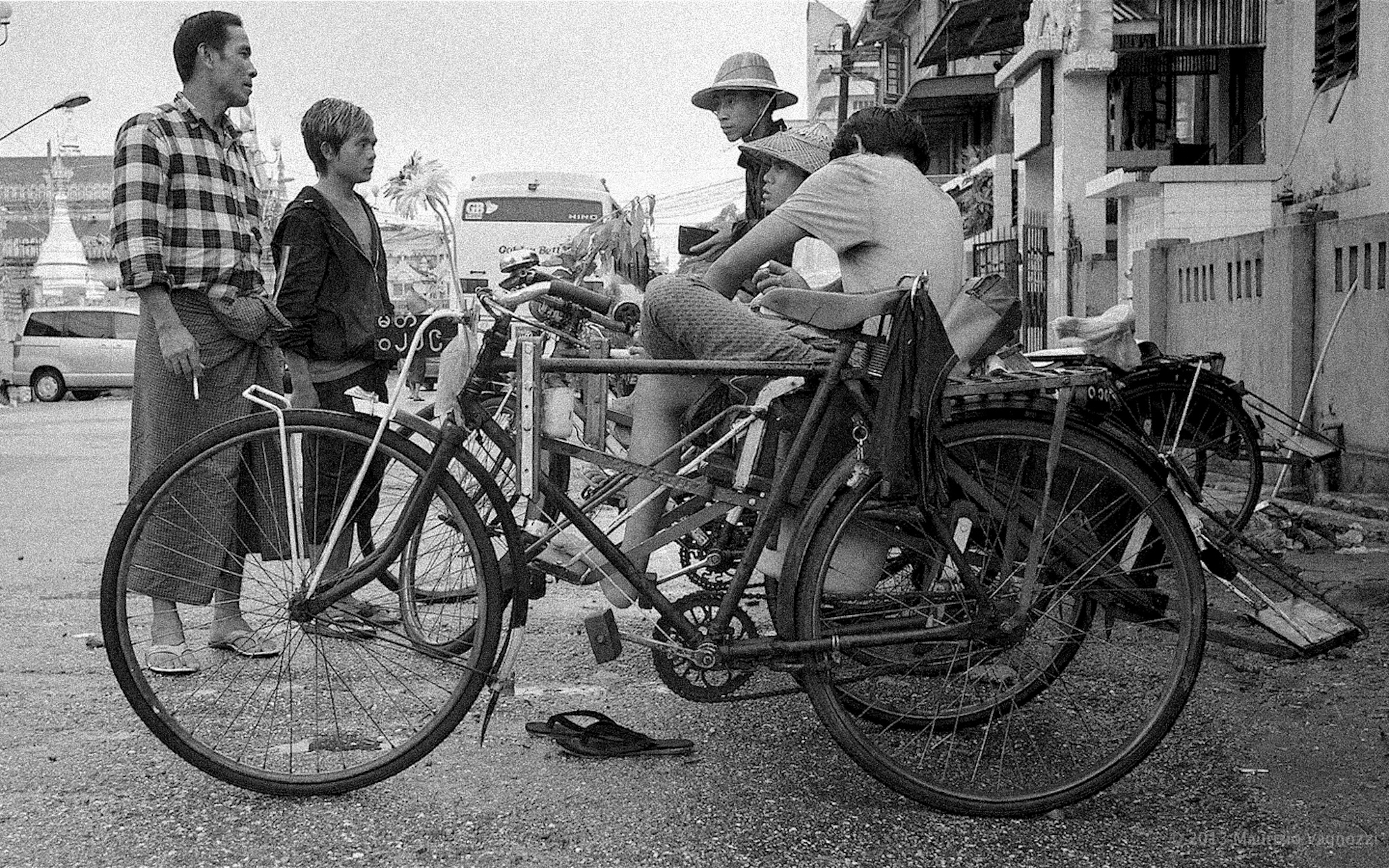
Yangon, Myanmar, 2013. Leica M7 with Summilux 35mm on Kodak Tmax400