When I met my good brothers and fellow photographers, ABC (Aik Beng Chia) and Victor, at the gate for our flight to Phuket last October, I honestly wasn’t sure what to expect. My only previous experience on the island dated back to around 2008, when I took a seven-week sabbatical that had me
bouncingbetween Bangkok, Singapore, Phuket, Sydney, Hobart in Tasmania, Kuala Lumpur — and finally back to Italy via Dubai. I burned through every mile in my frequent flyer account on that trip!
A few months earlier, the guys had told me about the
Vegetarian Festival— officially known as the Nine Emperor Gods Festival — and I have to admit, even though I like to think I know Asian culture and traditions fairly well, their stories were almost too wild to believe. Still, I was ready for a week-long deep dive into this extraordinary ritual celebration, followed by a few “contingency days” to relax and enjoy the island before heading on to Bangkok Talat Noi.
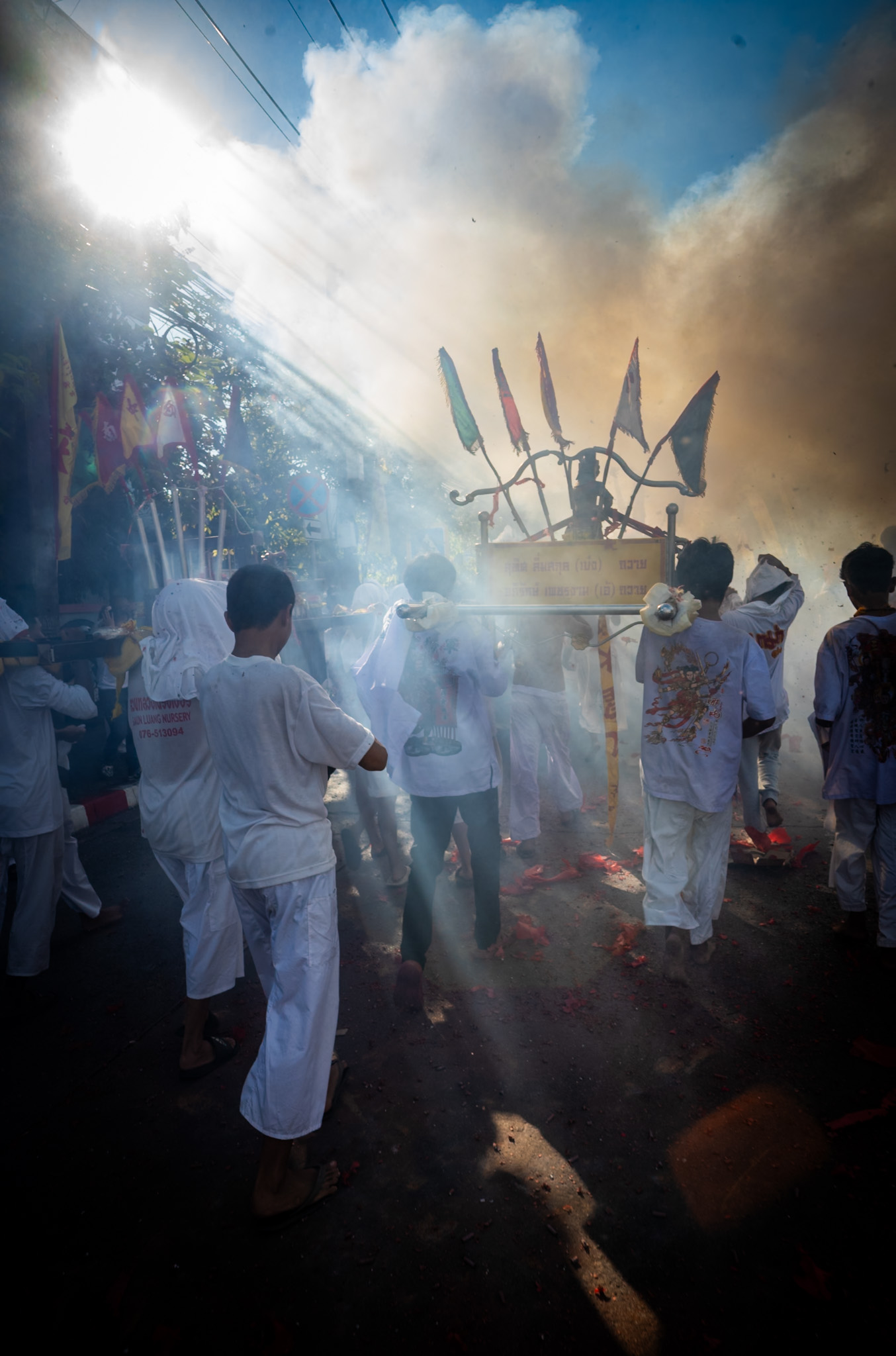
Landing at dawn, and the air in Phuket Town is already trembling with sound — a staccato roar of
firecrackersechoing through narrow streets lined with shrines and food stalls. Smoke thickens the sky into a pale haze, and the smell of gunpowder mixes with incense, durian, and sweat. The
Nine Emperor Gods Festival, one of southern Thailand’s most intense and photogenic rituals, is in full motion. What began more than a century ago as a quiet Taoist purification ceremony has evolved into a spectacle of devotion, endurance, and controlled chaos.
The festival, celebrated in the ninth lunar month of the Chinese calendar — usually in late September or early October — honors the Nine Emperor Gods, celestial sons of the
Jade Emperorwho are said to descend to earth to bring prosperity and cleanse humankind of evil. In Phuket, where a large Chinese-Thai community keeps the tradition alive, the festival lasts nine days and nights. Devotees adopt strict vegetarianism, avoid alcohol, sex, and stimulants, and dress in white to signify purity. The abstinence, they say, allows spirits to enter their bodies, transforming them into mediums through which divine energy flows.
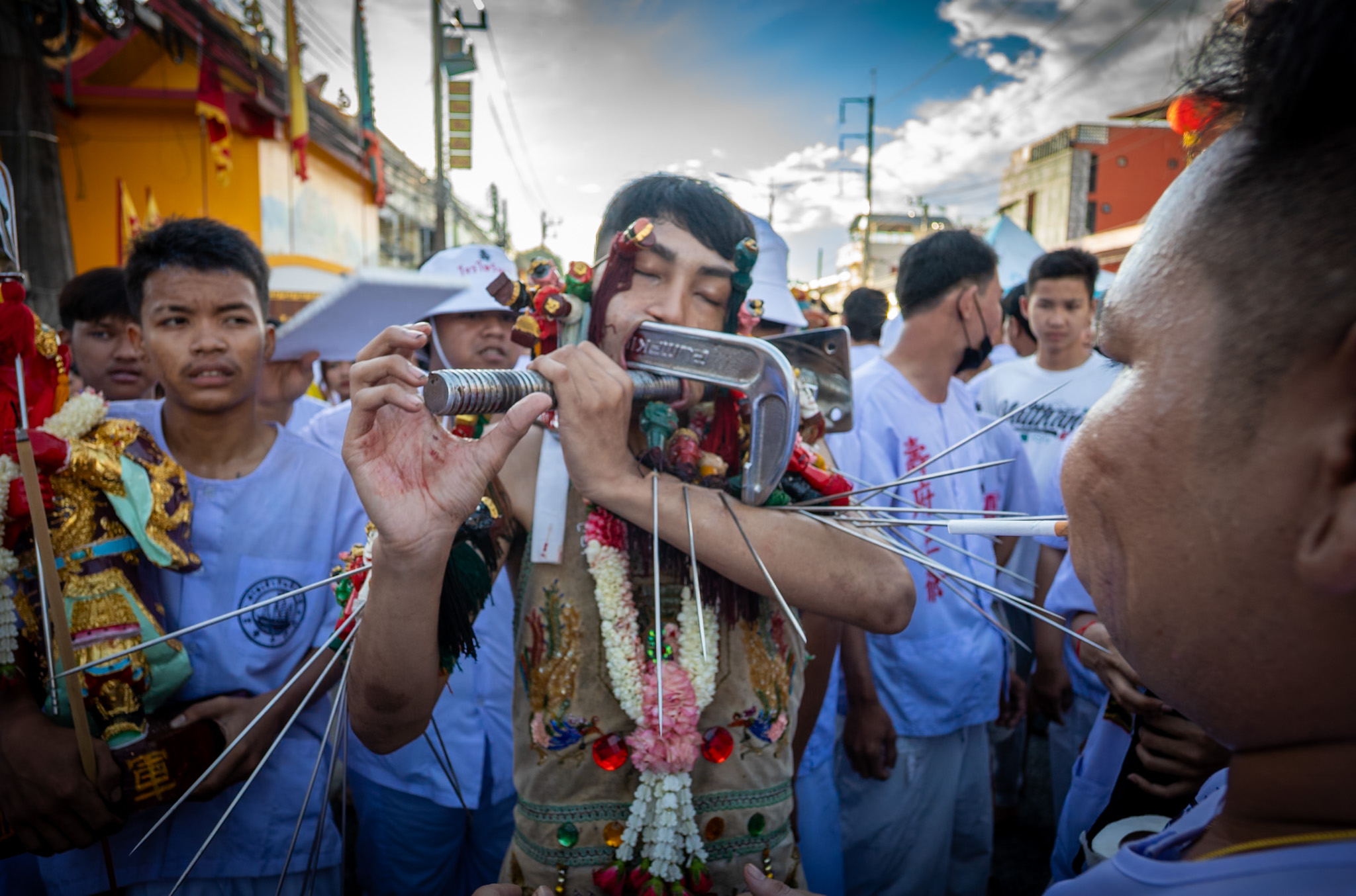
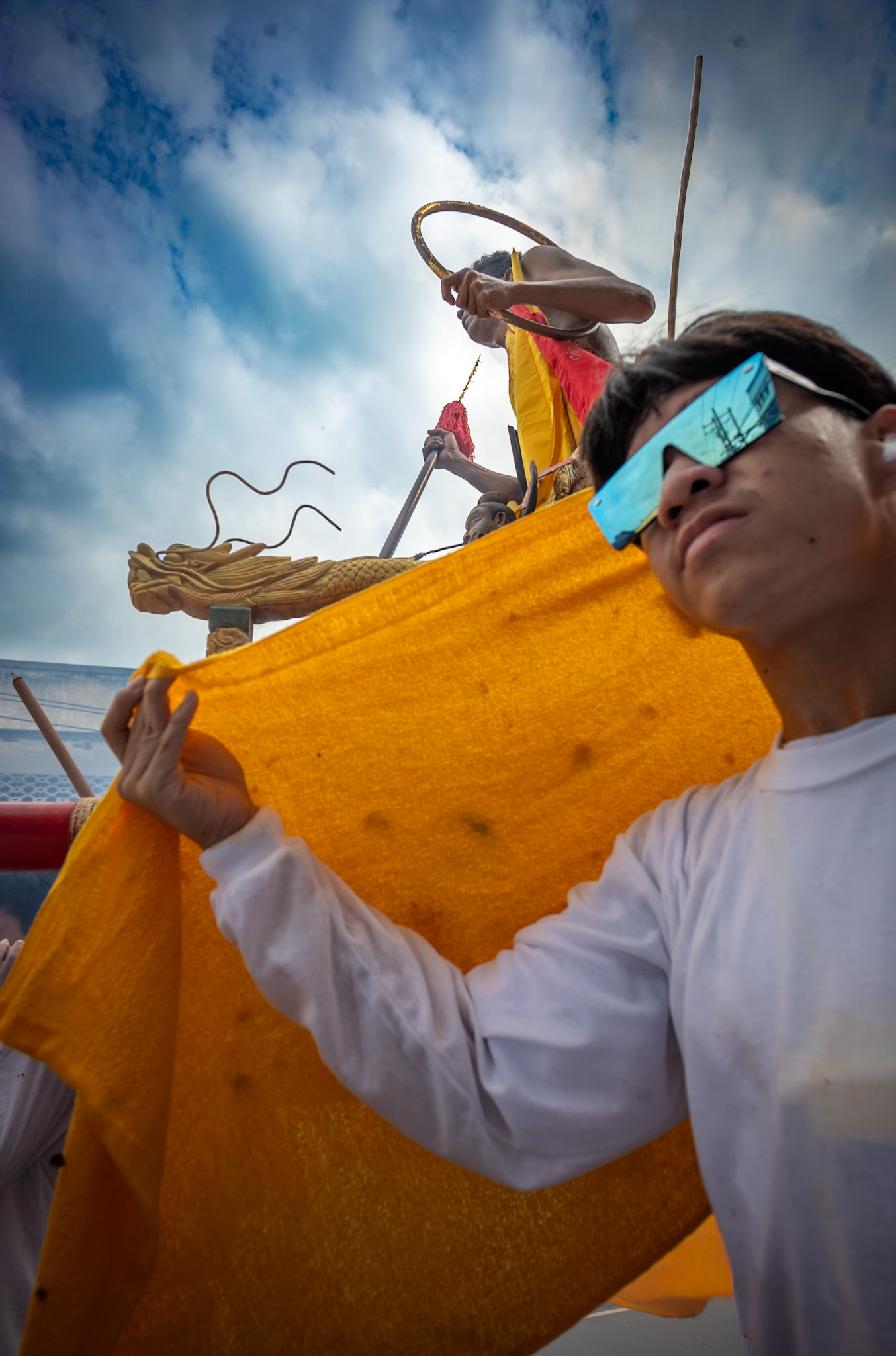
That transformation is what gives the festival its visceral
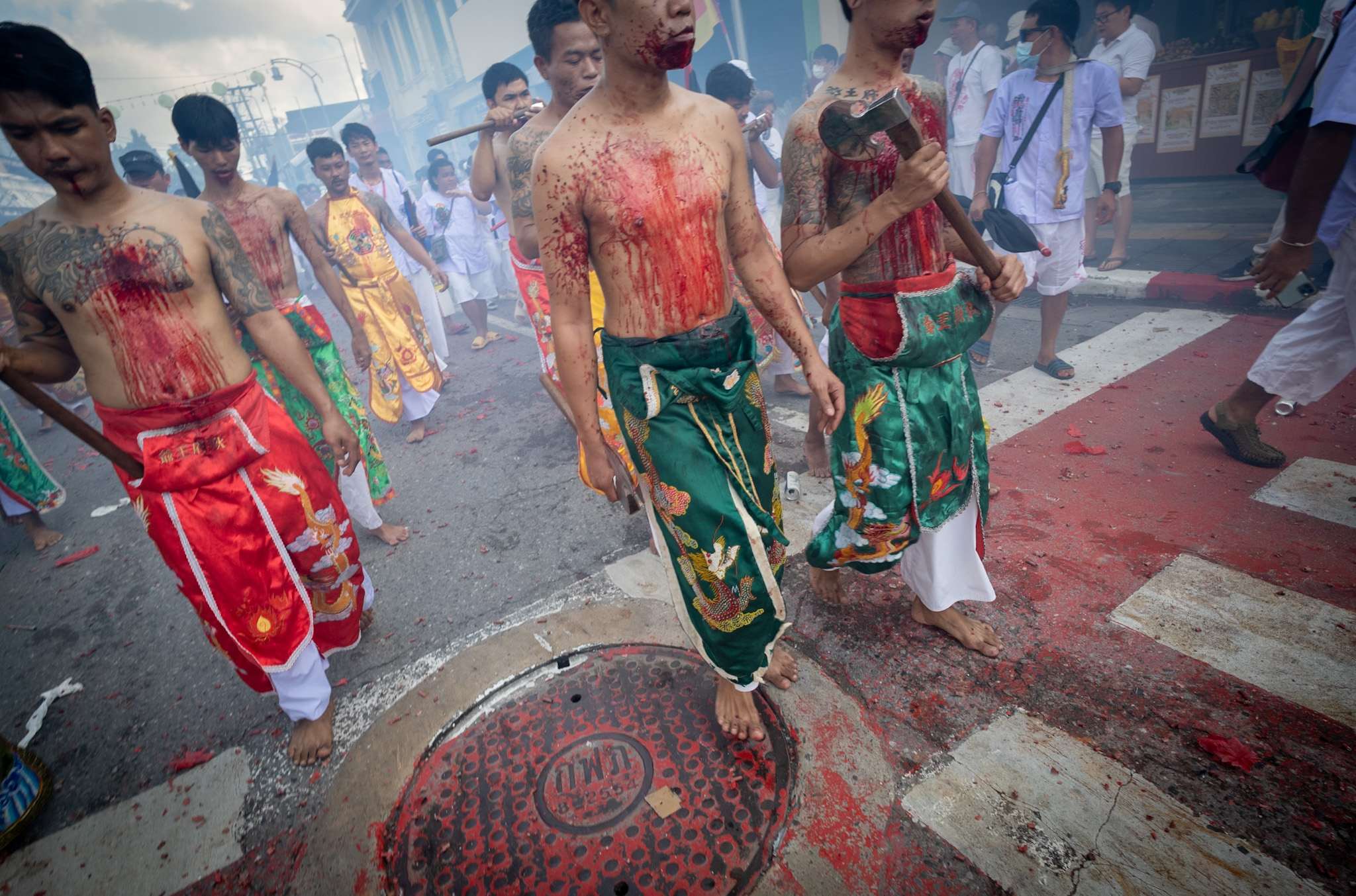
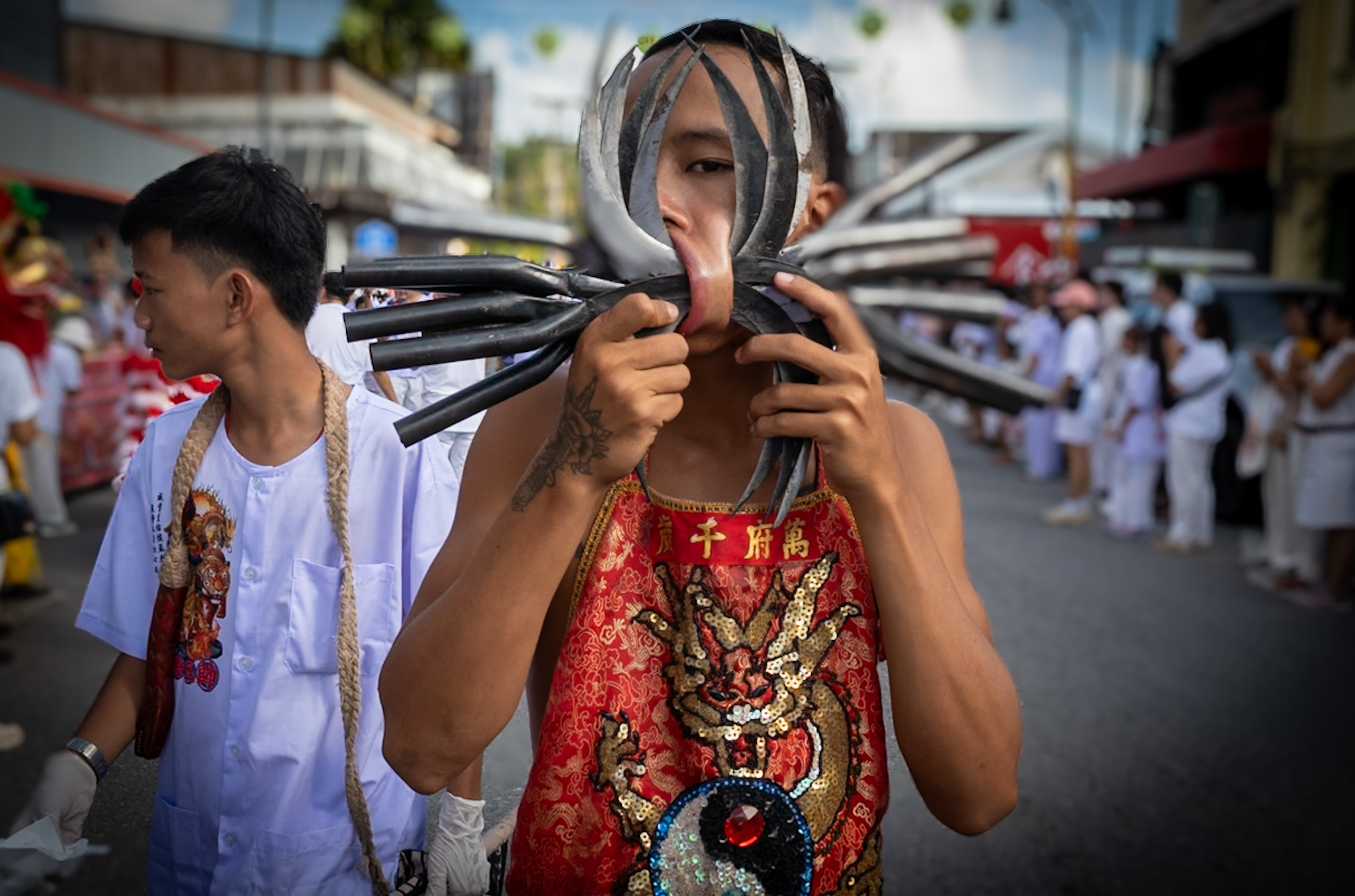
power. As morning processions wind through the city, men and women known as ma song — spirit mediums — walk barefoot on hot asphalt, their cheeks and tongues pierced by swords, spears, bicycle spokes, and even the shafts of umbrellas or model ships.
Bloodglistens on their faces but rarely gushes; the devotees believe that, while possessed, they feel no pain and suffer no lasting wounds. Around them, followers throw
firecrackersat their feet, filling the air with deafening explosions meant to drive away evil spirits.
To an outsider like I am, it can feel like madness — a collision of faith and frenzy. Yet within the rhythm of drums, the acrid smoke, and the blinding sparks, there is a deep sense of
order and sincerity. Each piercing, each explosion, is an act of offering. The ma song do not seek spectacle or glory but purification. Their wounds are prayers, their silence a vow.
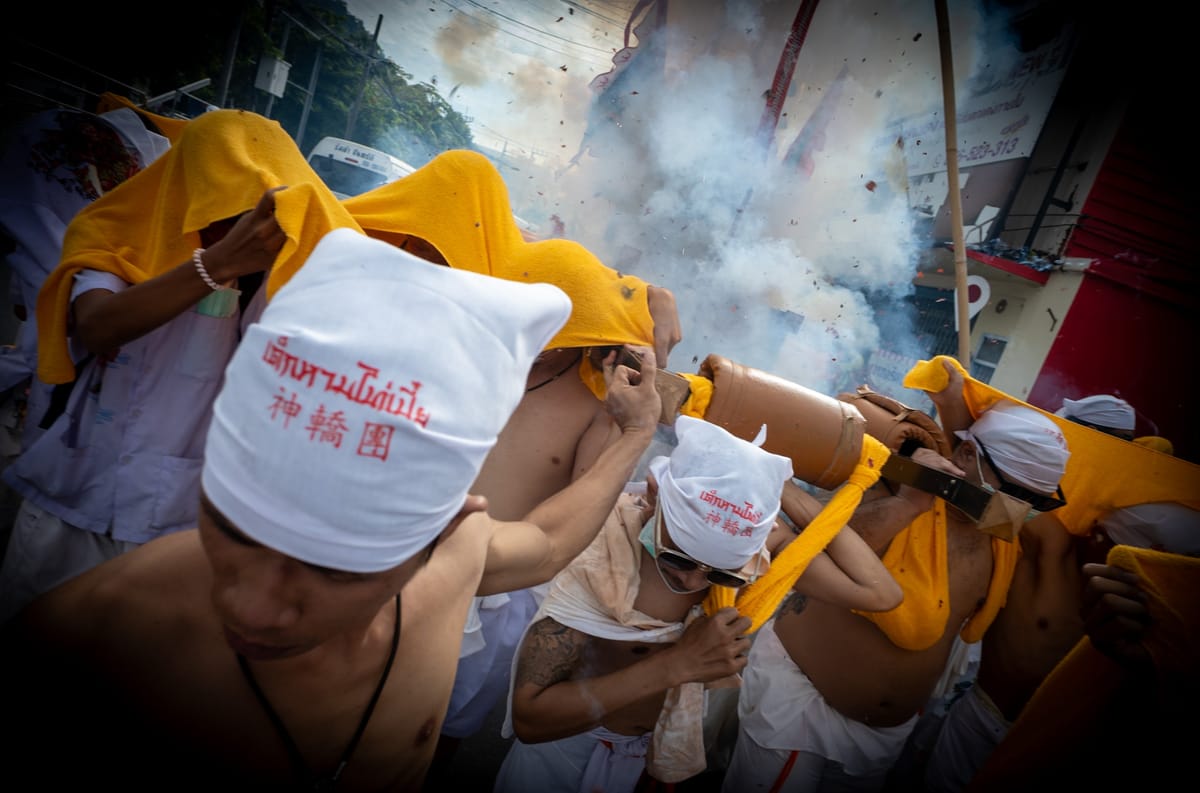
Fireworks, though constant throughout the festival, reach their peak during the night processions. As the gods are carried through the streets in palanquins lit by candles and neon tubes, devotees ignite
wallsof firecrackers that explode at close range, showering the carriers in flame and ash. The noise is almost unbearable — a physical vibration that rattles bones and fills the chest. Faces are covered with towels; eyes water uncontrollably. Yet no one flinches. It is believed that the chaos drives away misfortune and ensures prosperity for the year to come.
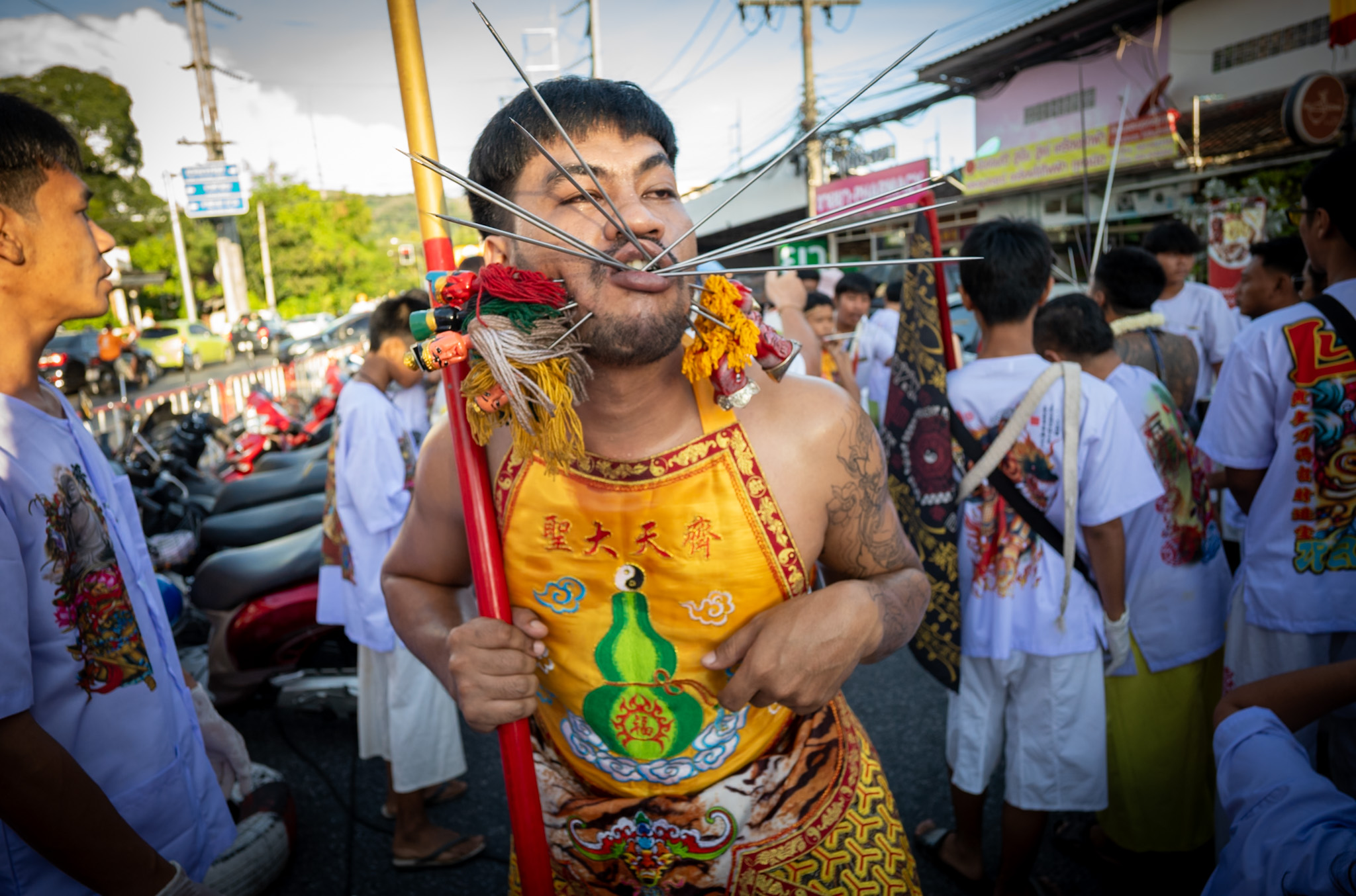
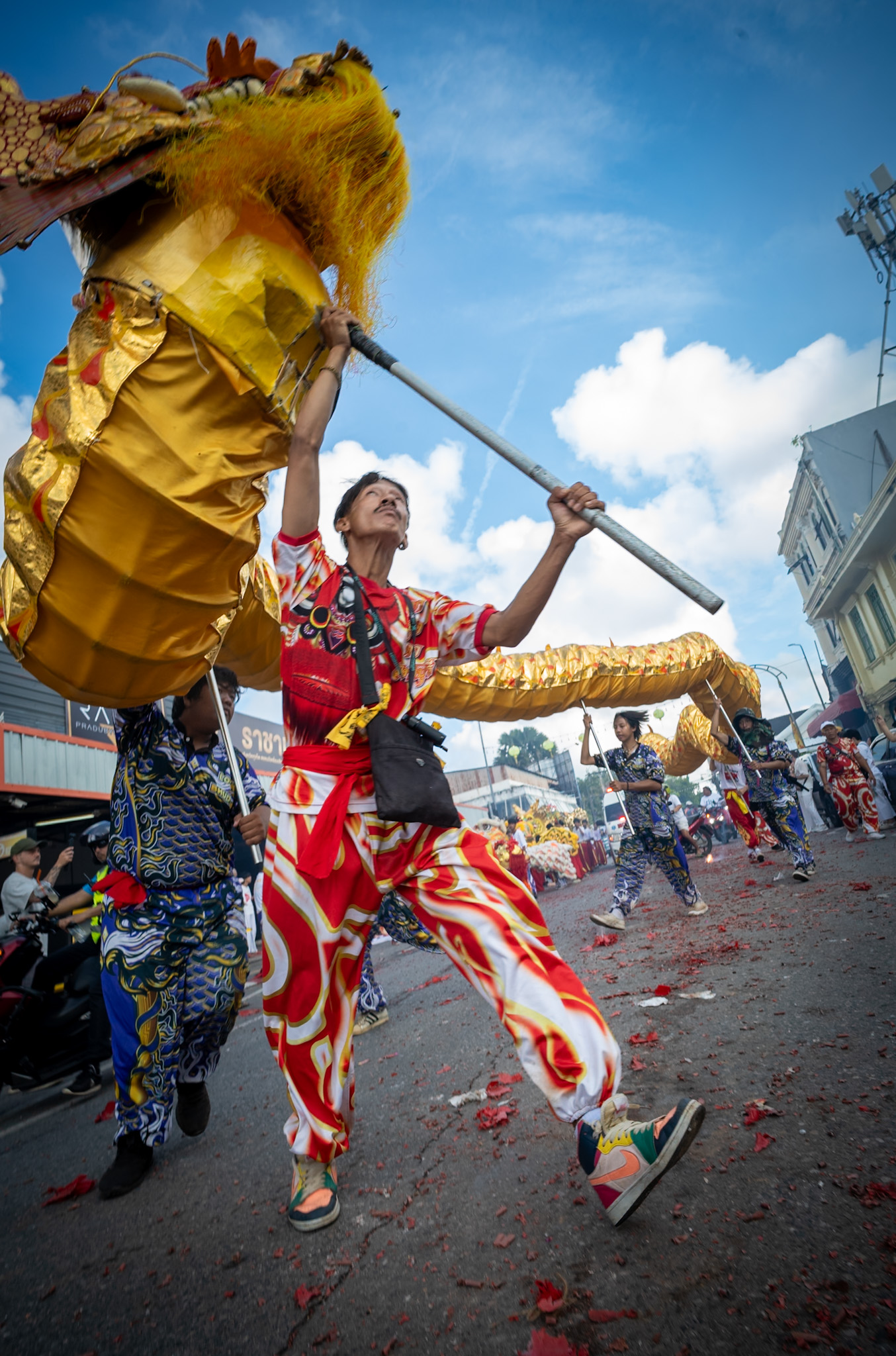
By the festival’s final night, the town is exhausted and
sanctified. The gods return to the heavens in a ceremony at the sea, where thousands gather to watch the burning of incense towers and paper effigies. The water reflects the flames, and for a few moments the noise fades into murmurs and prayer. Then, slowly, silence returns.
In that quiet, the meaning of the festival becomes clear: pain and
purification, chaos and
faith, destruction and
renewal— all bound together in a fierce devotion that survives every explosion.
In Phuket, the Nine Emperor Gods still rule, not from distant heavens, but from the smoke and fire of human belief.
I reported the festival in October 2024, with several detailed articles written in Italian, on NOC Sensei.
Photo shooting has been a real challenge, as several of my protection gear and lens cover were damaged by the fireworks. I want to thanks my two brothers photographers from Singapore ABC and Victor for their advise and support. I had in hand my
LeicaM10-R and
18mm/21mm/35mm lenses.