
In the increasingly crowded world of consumer-packaged-goods innovation, an unassuming product from South Korea stands out.
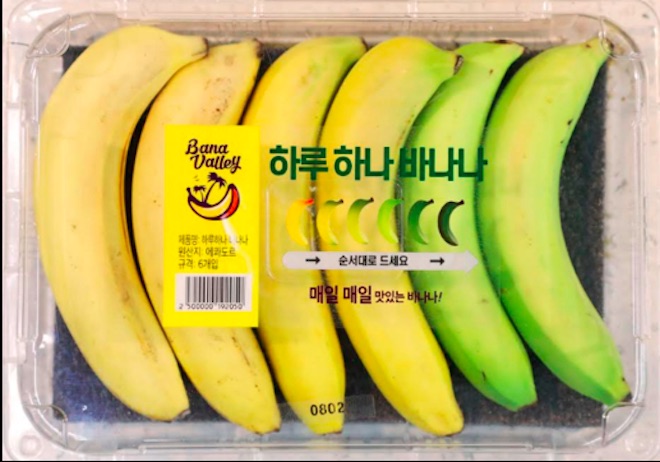
Haru Hana Banana– literally “one a day banana” – is a novel take on the humble fruit that re-packages it as part of a daily ritual. Introduced by E-Mart, the pack arranges six bananas each at a distinct stage of ripeness so that consumers can enjoy one per day, fresh and suitable to eat, and if you don’t like bananas, you can even use it as color palette!
At its heart, the Haru Hana concept addresses one of the perennial frustrations of fruit buying – the mismatch between purchase timing and
ripeness. A banana bunch will often present fruits that all ripen roughly at the same time: some too green today, some mushy tomorrow. E-Mart’s box intercepts that issue by ordering bananas from riper to less ripe, inviting the consumer to consume “one a day” and thus smooth out the consumption curve.
From a
brandingperspective, this is clever. The name itself promises a routine (“하루 하나” in Korean: “a day one”), which appeals to both the convenience-seeking shopper and the health-minded consumer who might favour a banana a day for its nutritional benefits.
The packaging thereby transforms a loose commodity into a purposeful,
branded habit. At the same time, the visual ordering of bananas – from yellow with little green through to greener bottoms – provides a vivid cue to the consumer, reducing decision friction (“Which banana do I pick today?”).
However, this innovation is not without its tensions. Critics have flagged the additional plastic or packaging material used for grouping and display as counter-intuitive to the sustainability narrative. After all, bananas already come with a natural peel; packaging them in a plastic-wrapped bundle may improve convenience but possibly at the cost of
added waste.
From a market perspective, one might view Haru Hana Banana as illustrative of broader trends in food retail: shifting from
commodity to service-orientedpackaging, emphasising user experience (ease, freshness, reduced waste) rather than simply lowest unit-cost. For the retailer, this could command a premium price and stronger brand loyalty. Indeed, media reports placed the pack at around 2,980 KRW (≈ US$2.70) in 2018.

Yet the question remains whether the idea is scalable—and whether it travels beyond
Korea. Bananas are a global staple, but the “packaged daily ripeness” idea may hinge on local consumer expectations (in Korea, high standards of freshness, premiumisation of fruit) and the logistics of sorting by ripeness. Additionally, the environmental critique may grow louder as sustainability becomes ever more central in retail strategy.
In short, Haru Hana Banana is less about the banana per se and
more about re-imagining how fruit is sold: a modest product repositioned through smart packaging, brand promise and consumer habit. It reflects how even basic produce is not immune to the supermarket arms race of convenience, differentiation and experience. Whether it becomes a global standard remains open—but for now, it is a telling case study in how packaging can rethink function (ripeness management) and marketing (daily ritual) in one sweep.
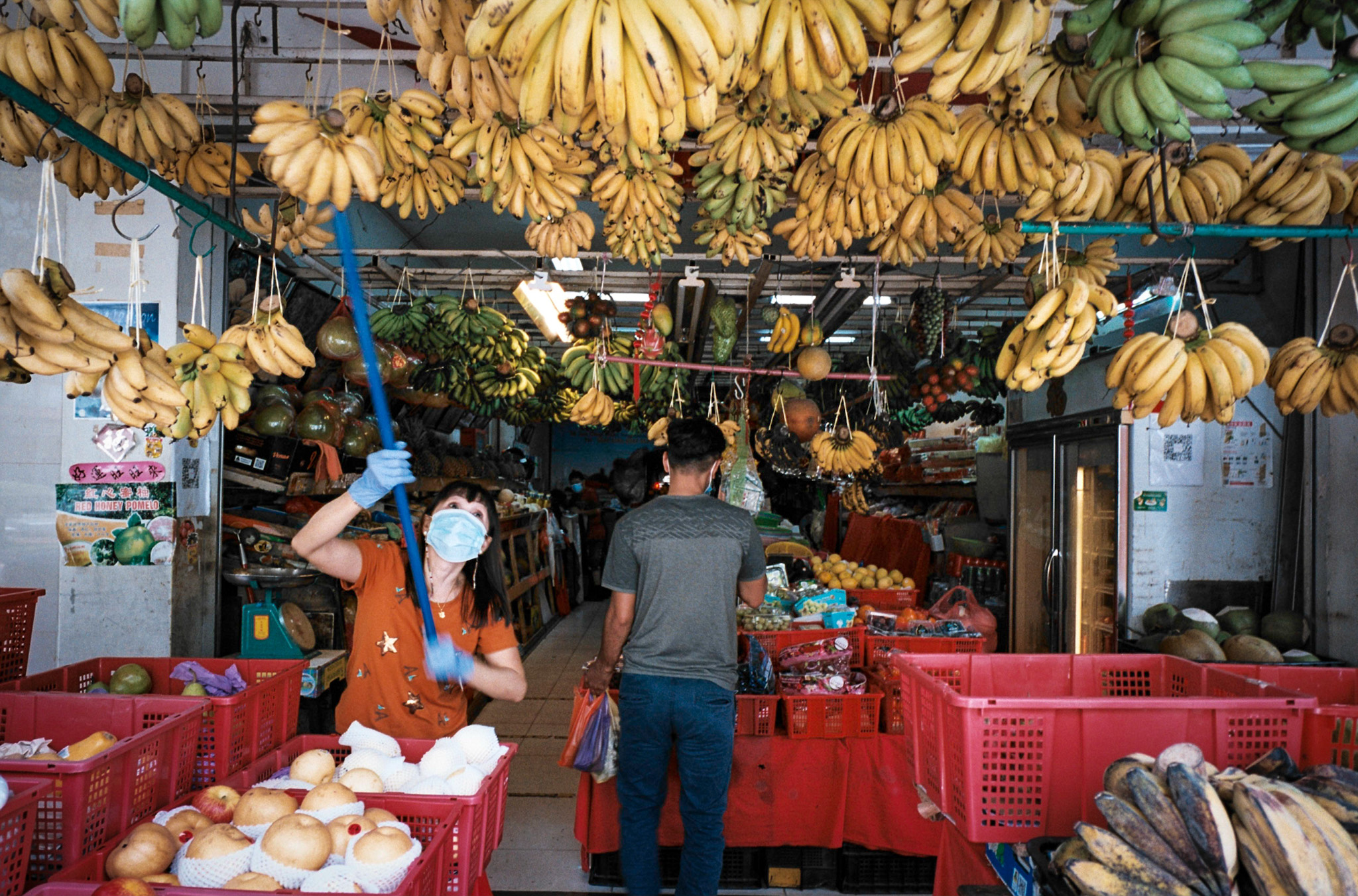
Photos? Bananas, of course!