
There are places that no longer exist, yet refuse to disappear. They linger in photographs, in blurred memories, in stories whispered with a mix of disbelief and fascination. The
Kowloon Walled Citywas one of those places—a geographical anomaly, a legal loophole, a vertical slum, and, paradoxically, a functioning human ecosystem.
I never walked its corridors. By the time I reached Hong Kong with a camera and time to linger, the Walled City had already been erased. And yet, few places I have never seen feel as present, as tangible, as Kowloon Walled City. Perhaps because it represents something we are no longer allowed to build: a city without permission.
Originally a Qing dynasty military outpost, the Walled City became a bureaucratic orphan after the British lease of the New Territories in 1898. China claimed it. Britain avoided it. The result was a legal no-man’s-land in the middle of colonial Hong Kong. For decades, this ambiguity was a footnote. Then came the wars, refugees, poverty—and the footnote turned into a footnote that
swallowed itself.

By the 1950s and 1960s, Kowloon Walled City began to grow vertically, not out of architectural ambition but
necessity. Buildings stacked on buildings, without architects, without permits, without urban planning. Concrete poured wherever there was space. Staircases met ceilings. Windows opened into other apartments at arm’s length. Sunlight surrendered early.
At its peak, some 33,000 people lived in just 2.6 hectares. One of the highest population
densitiesever recorded. But statistics fail to explain the texture of life inside.
This was not chaos in the cinematic sense. It was
improvised order. Electric cables ran like vines. Water pipes dripped constantly. Neon lights glowed even during the day, because day barely existed below the rooftops. Dentists practiced without licenses. Small factories produced fish balls, noodles, plastic goods. Temples hid between stairwells. Children played on rooftops where the only open sky remained.
Crime existed, of course.
Triadsoperated there, especially in the early years. But the myth of Kowloon as a lawless hellscape is incomplete. Most residents were ordinary families, workers, migrants who needed a place where rent was cheap and questions were few. They developed their own social codes, their own
rhythms. You didn’t call the police; you called a neighbor.
What fascinates me, looking back through photographs and testimonies, is how human the place was. Not heroic. Not romantic. Human. People adapted. They found beauty in plants growing on rooftops, in shared meals, in familiarity. The Walled City functioned not because it was designed well, but because people
refused to let it fail.
From a photographic point of view, it was a black-and-white
universeeven when shot in color. Contrast everywhere. Darkness swallowing faces, sudden shafts of light cutting across corridors. The geometry was accidental but relentless. Lines, grids, layers—an urban
Leica Monochromdream, if such a thing can be said without sounding obscene. But also a moral dilemma: where does documentation end and exploitation begin?
The end came, inevitably. In the late 1980s, Britain and China agreed that the Walled City had no place in the future Hong Kong. Residents were compensated. Bulldozers arrived.
By 1993, it was gone. Where compression once ruled, a park emerged—orderly, green, sanitized. A place for tai chi and families, where plaques politely explain what once stood there.
And yet, something feels missing. Not the poverty. Not the danger. But the idea that cities can grow
outside blueprints. That humans, when left alone, will create systems—flawed, fragile, but alive.
Kowloon Walled City was an embarrassment to modern urbanism. It contradicted every
rule. And for that reason alone, it matters. It reminds us that cities are not just plans and regulations; they are accumulations of need,
fear, hope, and stubborn
survival.
Today, Hong Kong moves fast,
efficient, vertical,
regulated. But somewhere beneath the glass and steel, the ghost of the Walled City remains—a reminder that the most extreme forms of urban life are often born not from ambition, but from neglect.
And once in a while,
neglect builds somethingunforgettable.
I never visited Kowloon, although I was in Hong Kong when it had not yet been demolished — perhaps because I lacked, at the time, the experience that would later take me into some of the world’s most complex places, across Africa, Asia, and Central America.
It has always fascinated me as a strange social laboratory. My mental references were a distorted echo of the Ideal Cities imagined by philosophers such as Plato, Hippodamus, and Tommaso Campanella. A
Tower of Babel, far removed from any concept of utopia, where Renaissance geometry dissolved into a dense, improvised mass of humanity.
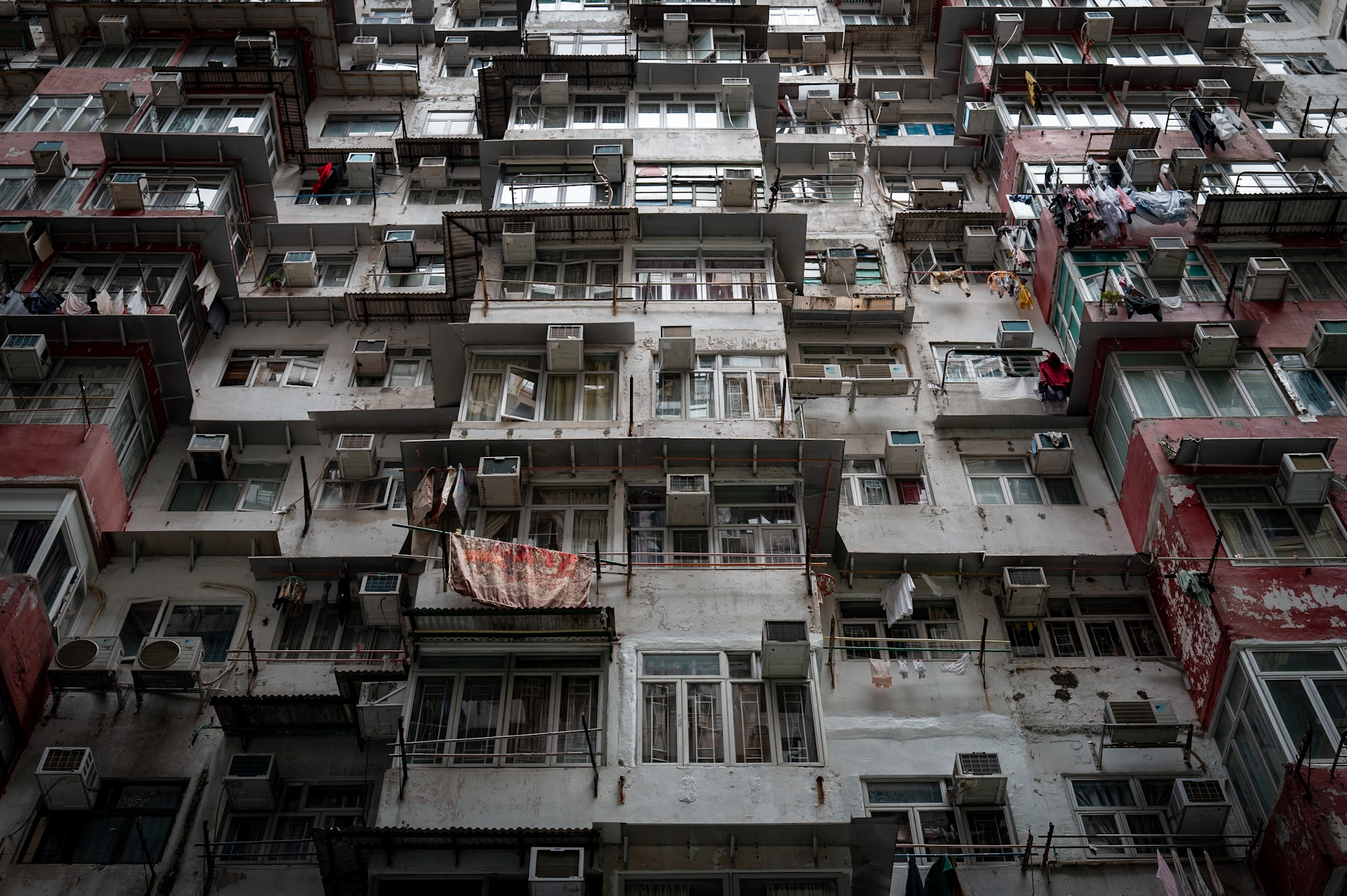
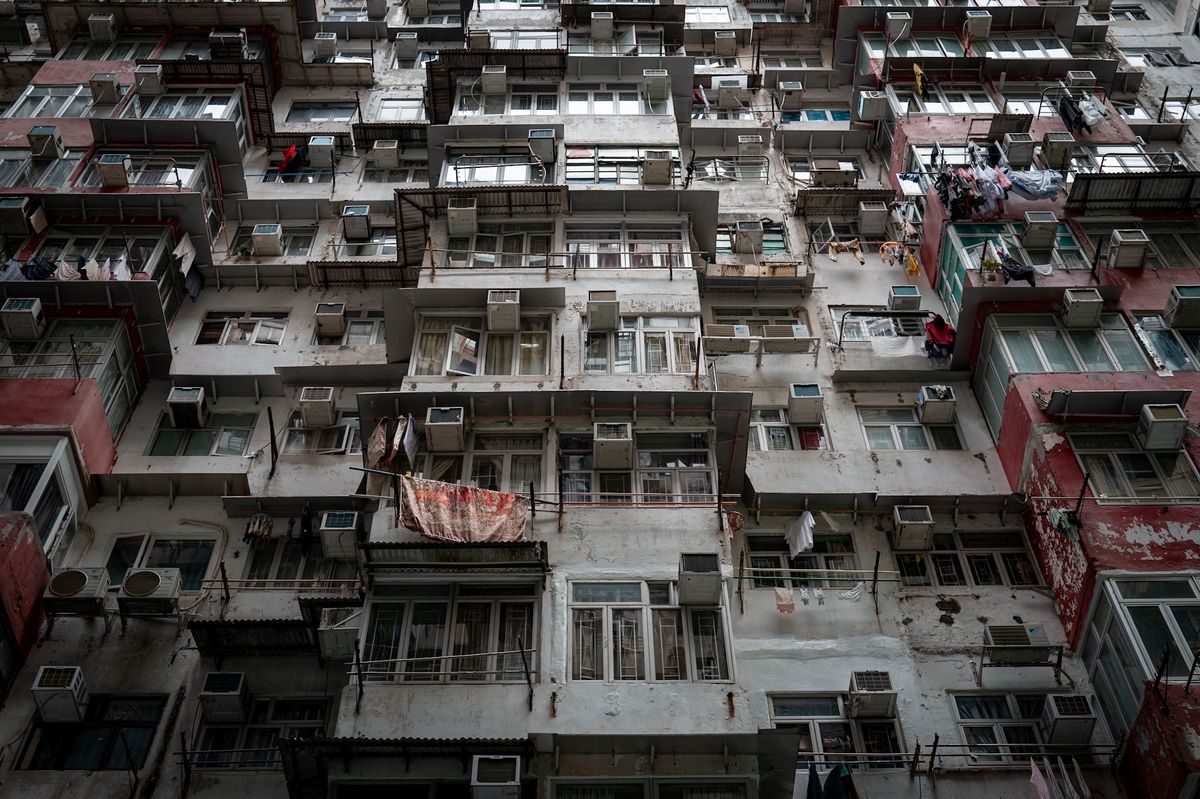
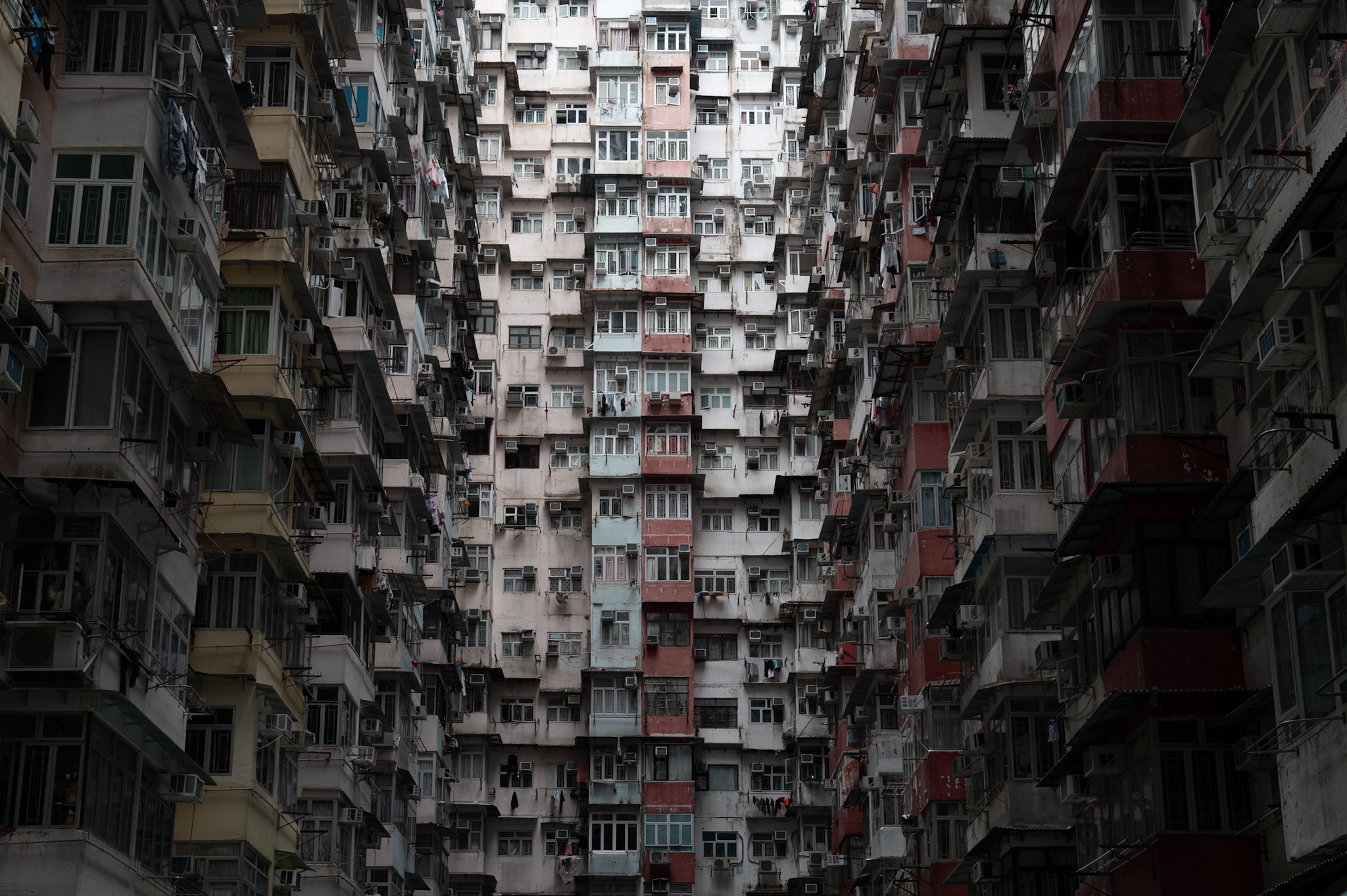
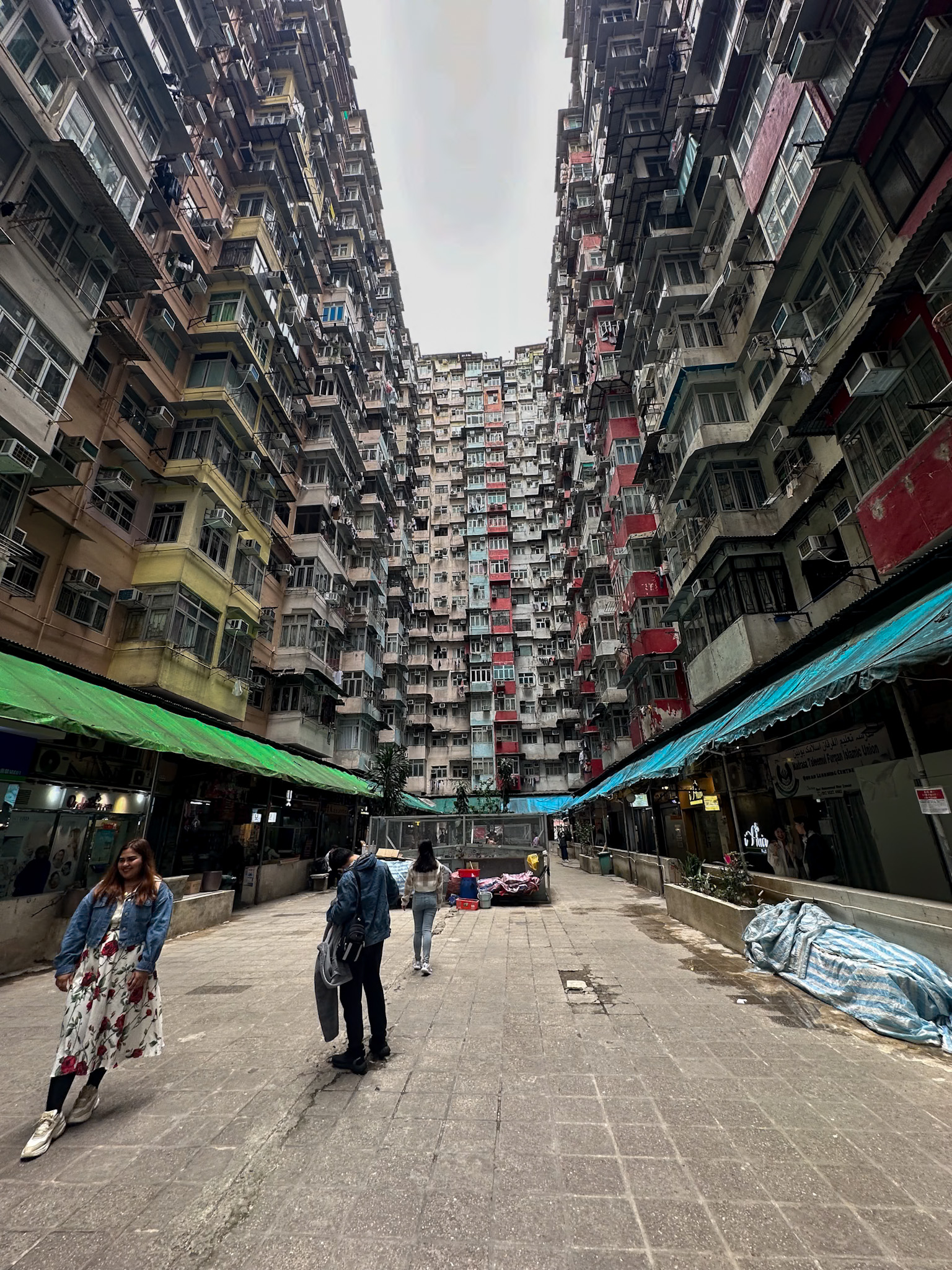
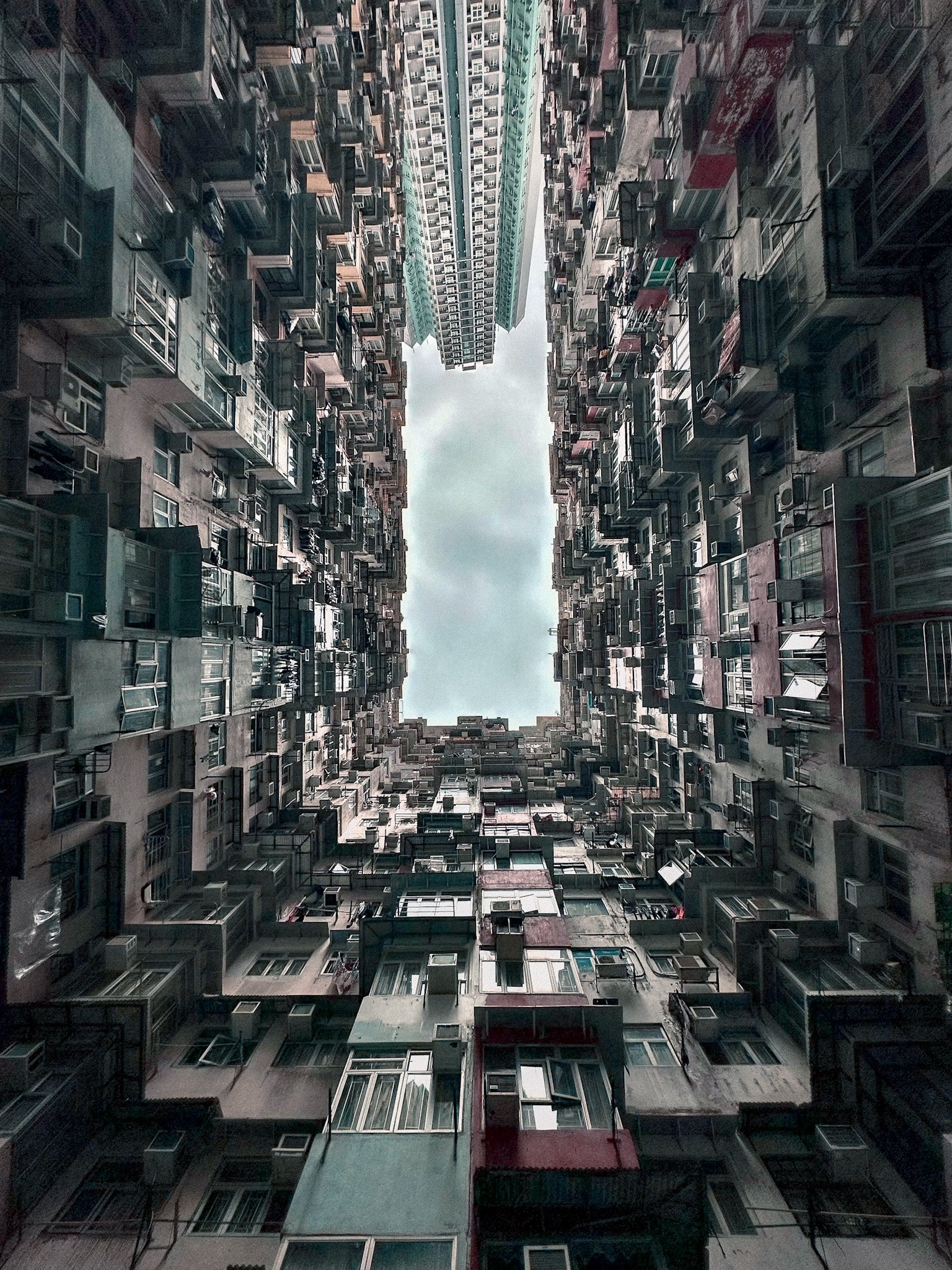
The only contemporary parallel I can truly recognize today is not in the shantytowns or squatter camps of Nigeria or South Africa, but in Hong Kong itself — in the Monster Building, visible in these frames taken with a
LeicaQ3 43 and an
iPhone.