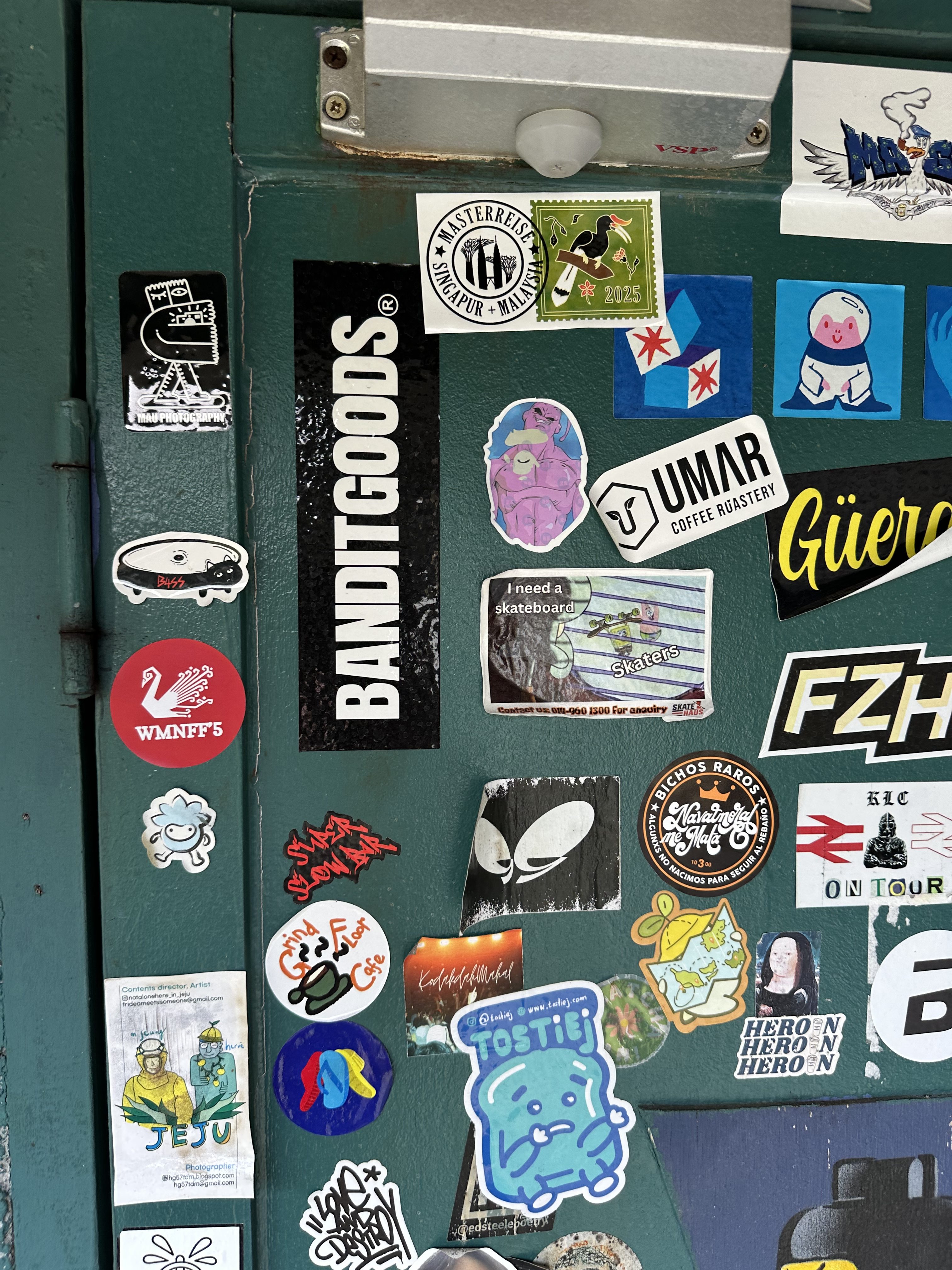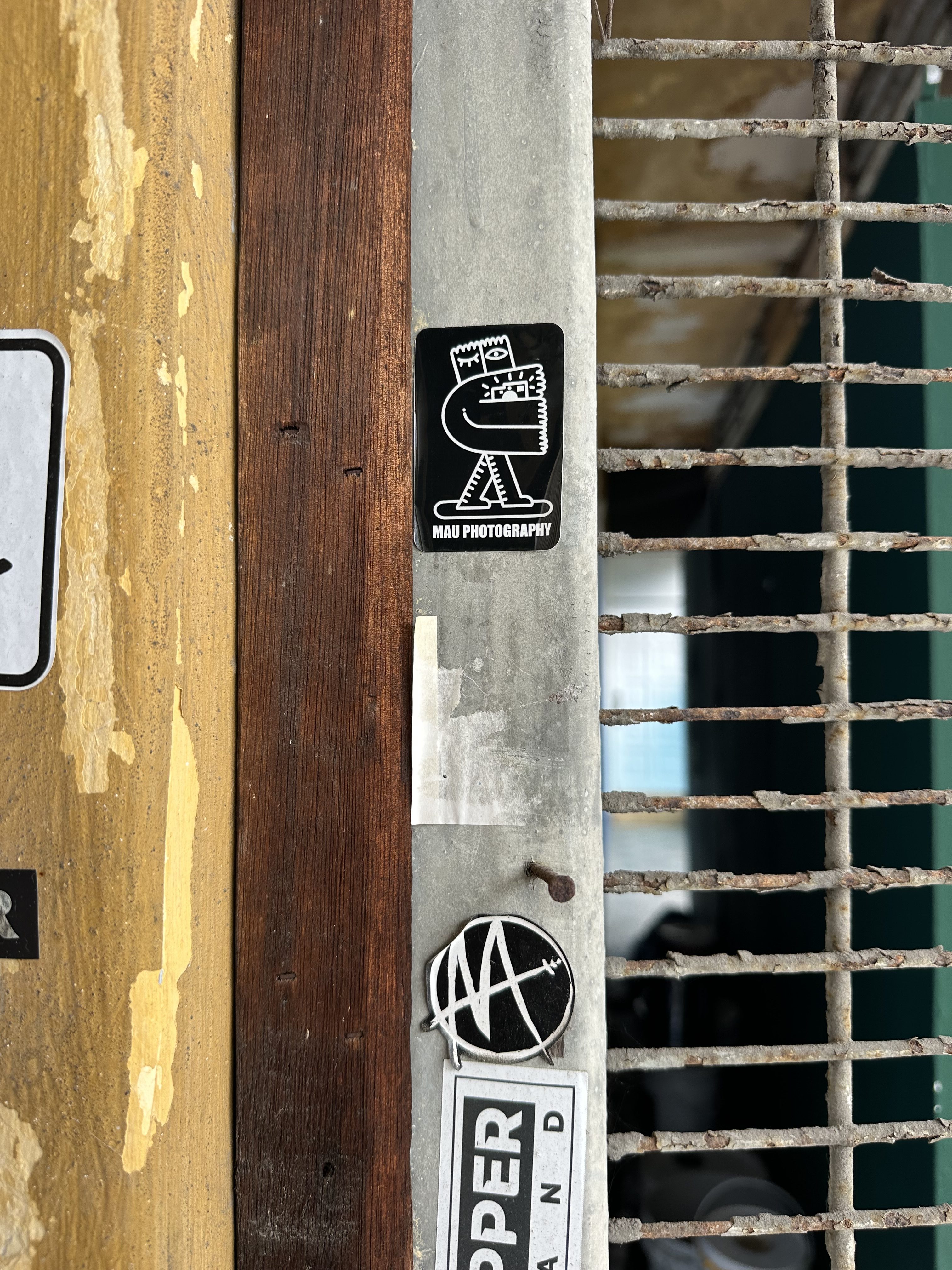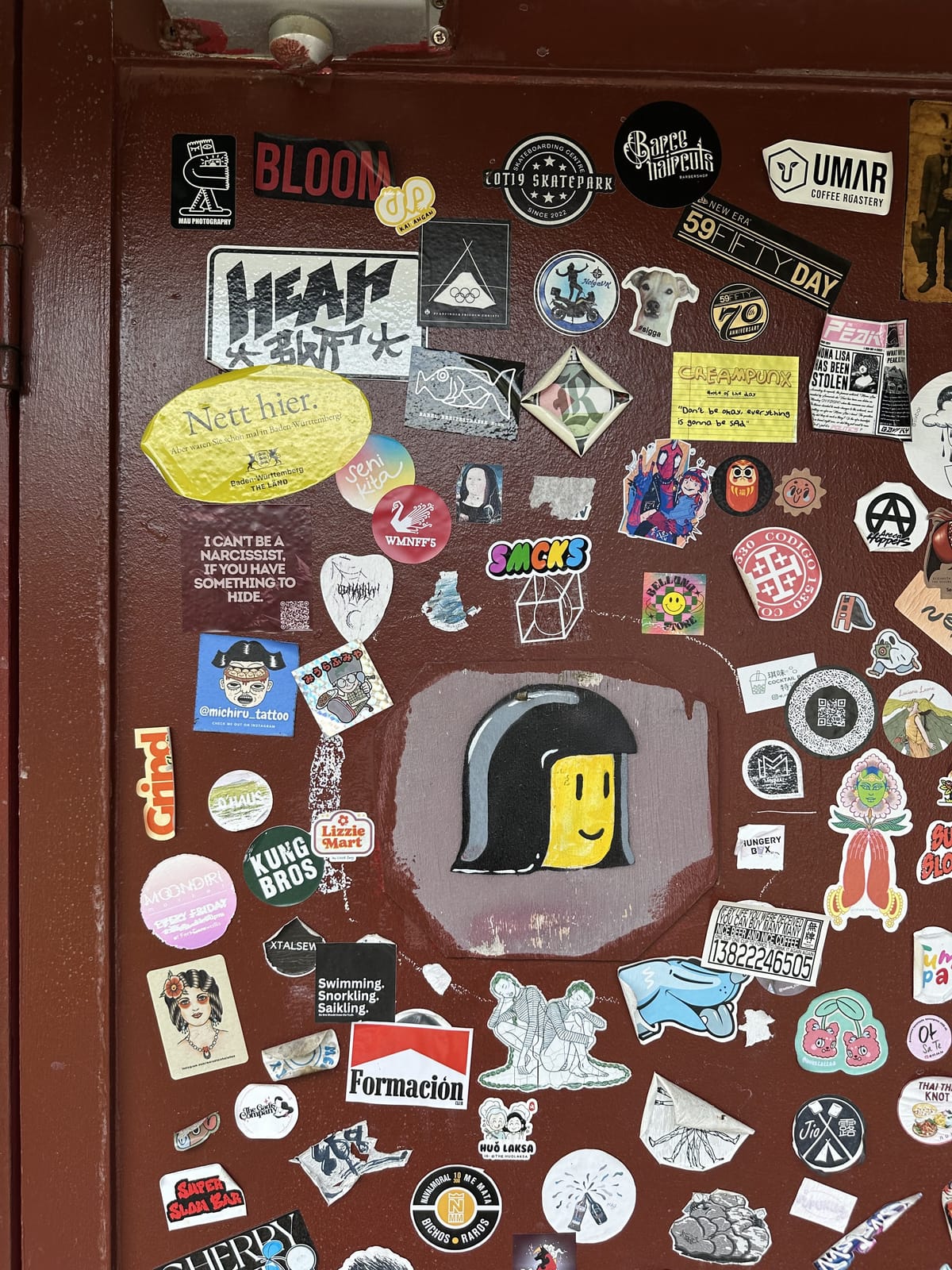
In the backstreets of Tokyo, on the battered lampposts of Bangkok, and along the electric-blue walls of Hong Kong’s SoHo district, a silent conversation unfolds—one made not of voices but of
stickers. These small, adhesive artworks, often no larger than a palm, carry with them the signatures of local artists, global travelers, and anonymous dreamers. They are fragments of identity, rebellion, and humor, layered upon one another in a visual dialogue that stretches from Seoul’s alleyways to Penang’s back doors.
Sticker culturein Asia is an evolution of both graffiti and digital-era self-expression. It grew organically from skateboarding scenes, music subcultures, and street art movements in the late 1990s, yet today it reflects something far broader: the democratization of creativity. Unlike murals or graffiti, stickers require neither walls nor permission. Anyone with a printer, a roll of tape, or a sense of irony can claim a piece of the city’s surface.
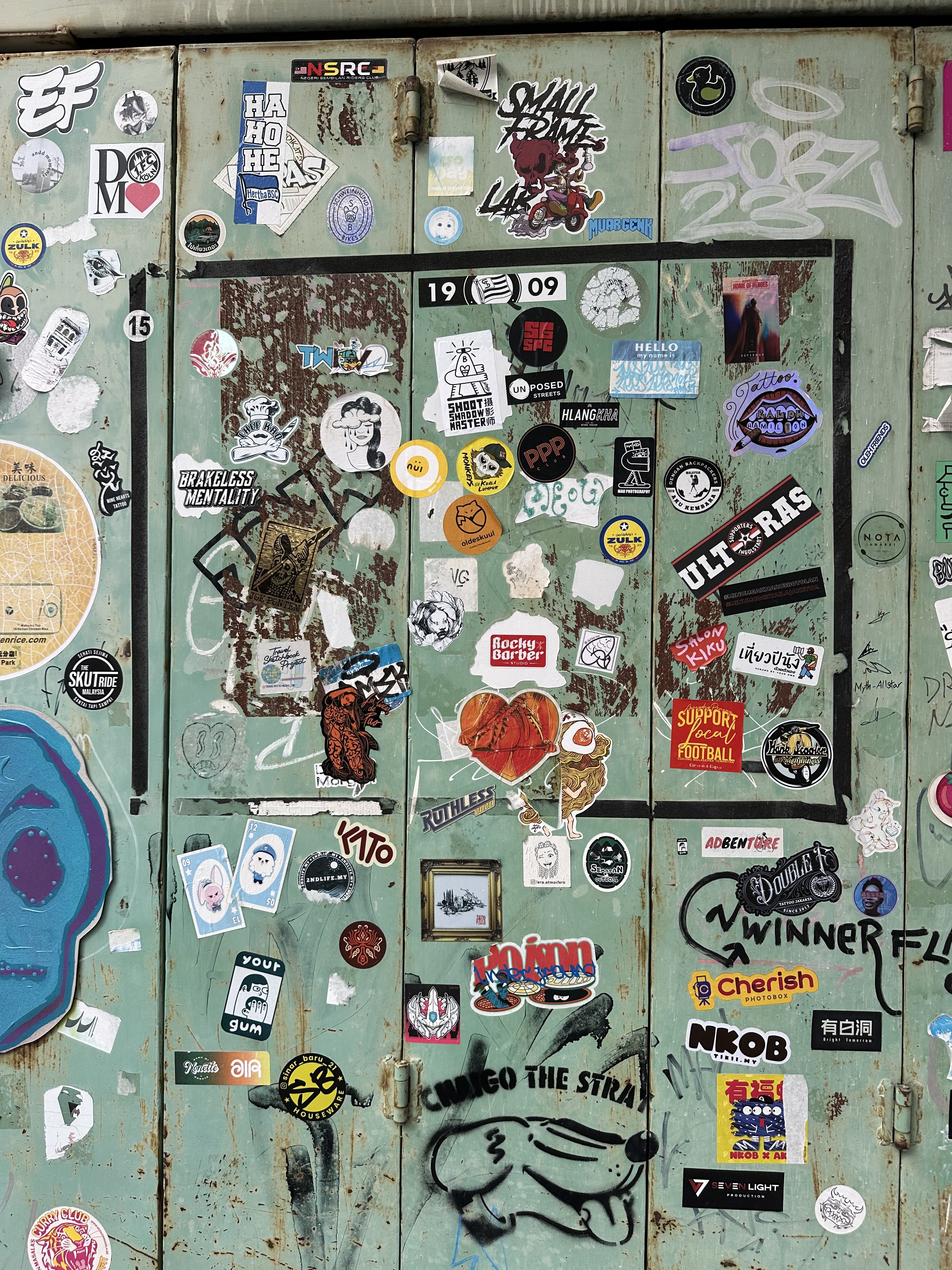
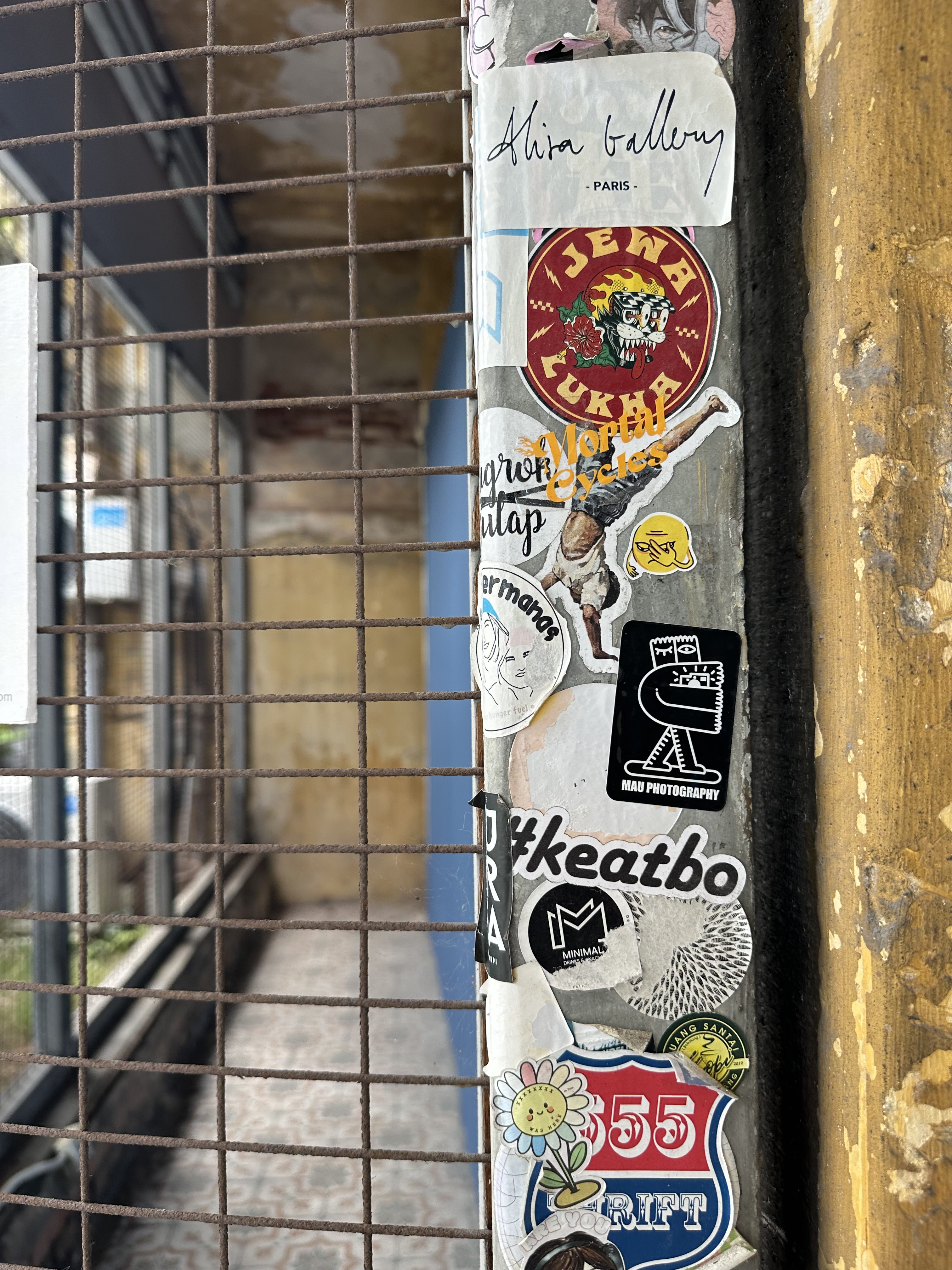
In Bangkok’s Ari district, local artist “Poon” spends his evenings walking through café-lined streets, sticking miniature portraits of cats dressed as monks on mailboxes and traffic signs. “
It’s not vandalism,” he says with a smile. “
It’s conversation.” Within days, other artists respond—sometimes pasting their own stickers next to his, other times remixing his work into new forms. The result is a constantly evolving collage that belongs to everyone and no one.
In Tokyo’s Shimokitazawa, a mecca for youth culture, stickers have become part of the urban fabric. Convenience stores’ metal doors, once blank and functional, now act as collective canvases. Brands like BNE, Obey, and countless local micro-crews coexist with hand-drawn cartoons and QR codes linking to underground zines or music collectives. The layering itself tells time—the older, faded stickers a memory of subcultures past, the newer ones marking the pulse of the moment.
Across the sea in Taipei, sticker art takes a more refined turn. Independent designers produce limited series sold in night markets, each one a mix of humor and craft. “People don’t buy stickers just to decorate laptops or scooters,” explains Chen Li, a graphic artist. “They buy stories they can stick on.” In Penang’s heritage streets, where murals by Ernest Zacharevic once defined the visual landscape, stickers now play the role of micro-graffiti—subtle, almost intimate interventions that reclaim public space
without defacingit.
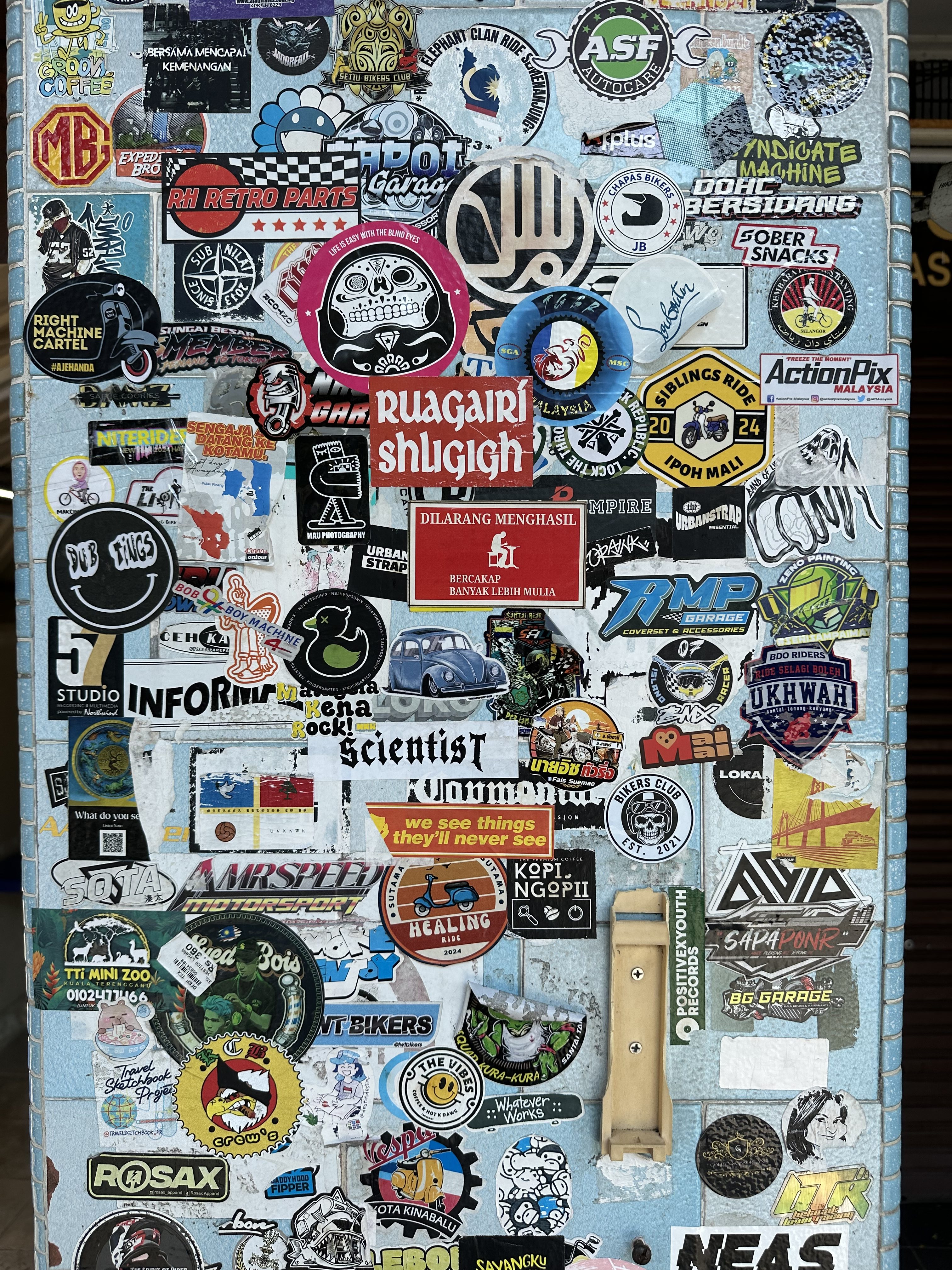
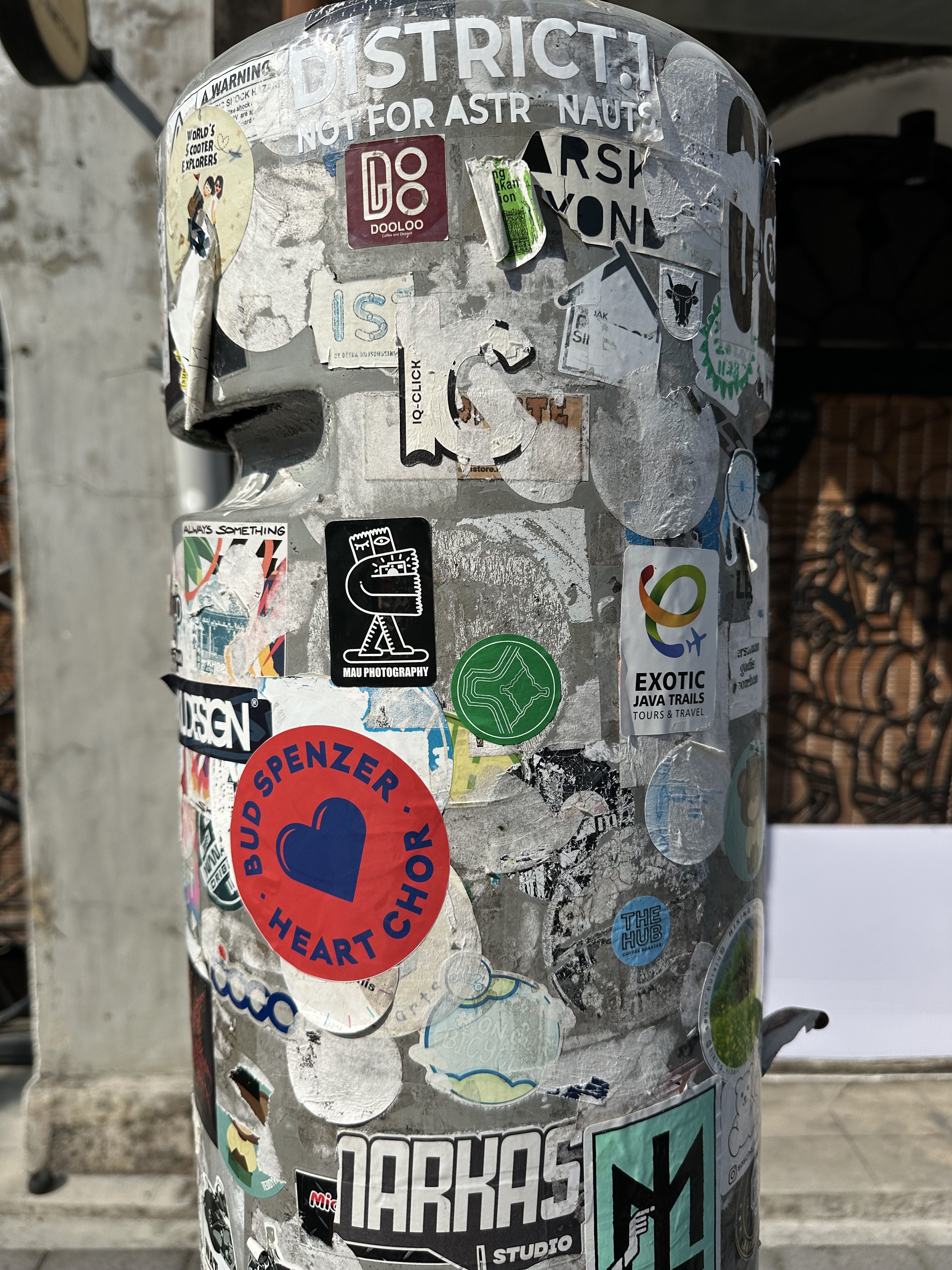
What connects these diverse scenes is not style, but spirit. Sticker culture thrives in the margins: between art and protest, commerce and friendship. It bridges cultures and languages through
imagery—cartoon ghosts, slogans, poetic fragments. In an era dominated by social media, these small adhesives remain proudly analog, existing only where one must physically go to see them.
To notice sticker culture is to see the city differently—to read its walls not as surfaces to clean, but as pages of a living diary. Each sticker, whether peeling or freshly printed, is an act of presence, a declaration that someone was here, felt something, and decided to share it. Across Asia, these stickers form a constellation of
human traces—tiny, colorful, and profoundly alive.
As you can see from the photos, I have joined the movement 😎