

Following my recent post on Malaysia’s 2026 outlook, (the “Garibaldi Talk” you can read here), another good friend challenged me to share a similar forecast for other Asian economies. Let’s start with Siam.
As 2025 ends, the kingdom of Thailand appears caught between
stagnationand transformation. Politically, the countdown to a general election scheduled for early 2026 is already shaping coalitions and agendas. Economically, the growth engine is sputtering and structural headwinds are mounting. The combination yields a scenario in which 2026 could be a year of modest change—but little dramatic upside.
Thailand’s
economyhas entered a distinctly sub-3 % growth zone, a far cry from the 6-7 % expansions of a decade ago. The World Bank now expects growth of around 1.7 % in 2026. The Bank of Thailand (BOT) is even more cautious, anchoring its forecast at approximately
1.6 %for the year.
Several
interlocking pressuresexplain the downturn. First, exports (historically Thailand’s strength) are under siege by rising US/China trade tensions, increased tariffs, and front-loaded shipments that leave less momentum for 2026. Second, private investment remains weak as businesses hesitate in an uncertain global environment. Third, despite a low inflation environment (which gives policy space), weak demand and household debt constrain domestic consumption.


On the policy side, the BOT has communicated that monetary rates will remain accommodative through 2026. But loose policy alone is unlikely to overcome structural drags. If growth stalls near 1.5-2 %, then Thailand risks slipping further behind its ASEAN peers, with implications for employment, state revenues and
social stability.
Politically the spotlight is on the upcoming general election (anticipated around March 2026). The current government, led by Anutin
Charnvirakulof the conservative-populist Bhumjaithai Party, came into power through a coalition arrangement that hinges on a promise to dissolve parliament shortly after its policy statement.
The main challenge is the fading dominance of the once-pre-eminent Pheu Thai Party, which under the
Shinawatrafamily’s leadership has seen its political muscle wane amidst setbacks from court interventions and public weariness. At the same time, the People’s Party (not to be confused with similarly named earlier parties) is manoeuvring to exert influence without formally entering government — a reminder that Thai politics remains deeply
fragmented.


In 2026, if we want to bullet the main trends, we should expect (checking my crystal-ball):
- A tightly contested election with no party likely to win a clear majority, leading to another coalition government.
- Hopes of constitutional reform or at least high-profile debate around it, as electoral platforms stress modernization and reducing military influence.
- A possibility of renewed grumbling about the role of the judiciary and so-called “non-electoral” interventions in politics — which may dent investor confidence.
- Continued reliance on populist measures through election season (e.g., subsidies, consumer incentives) even as structural reform lags.
The economic stagnation/depression is feeding into the political narrative. With growth slowing and household debt still elevated, public patience for “business as usual” is fraying. A
subdued economyheightens the sense among voters that something must change. That opens a narrow window for political actors who can credibly articulate reform, especially in areas such as education, technology and inclusive growth.
But the converse is also true: political instability, frequent changes of government or abrupt policy shifts will risk squeezing the economy further — in a country where foreign investment is increasingly mobile and regional rivals are actively wooing global supply-chains.
What are the key risks for 2026 (still reading on my
foggy crystal ball):
- External shock: A fresh escalation of U.S. tariffs or a sharper slowdown in China would further compress exports and delay recovery.
- Policy mis-steps: A heavy tilt towards populist spending without addressing structural reform could raise debt risks and lower productivity growth.
- Political gridlock: A weak coalition with limited reform capacity could lead to inertia, dampening business confidence and delaying investment decisions.
Bottom line, Thailand enters 2026 in a low-growth trap with politics in transition. Without a bold and credible
reformagenda, the country risks stagnating. On the other hand, moderate reform and disciplined macro-policy could lift growth modestly to the 2-3 % range. Either way, the year ahead will be less about rapid transformation and more about
managing the driftand honing the direction of the next five-year chapter.
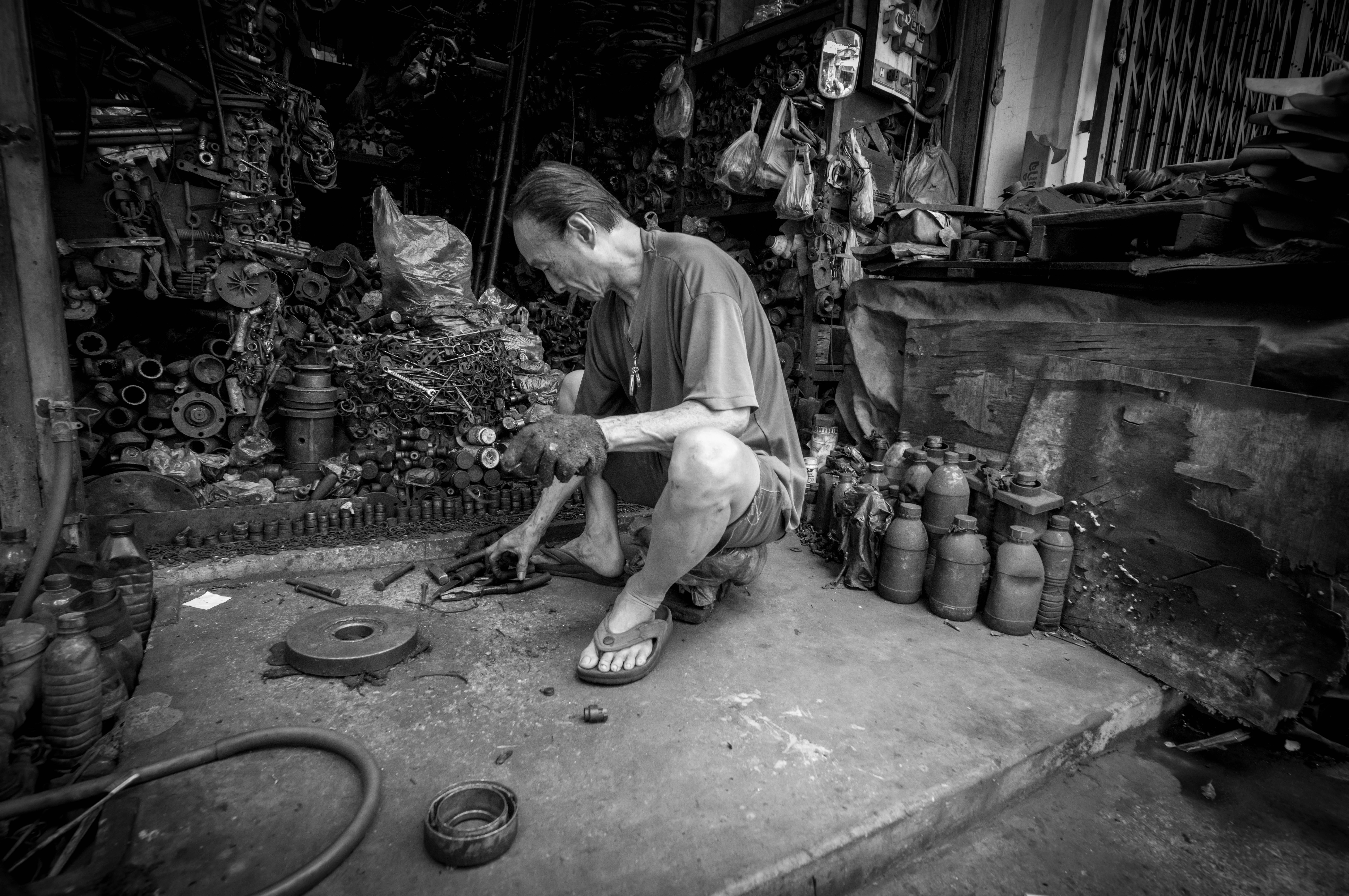
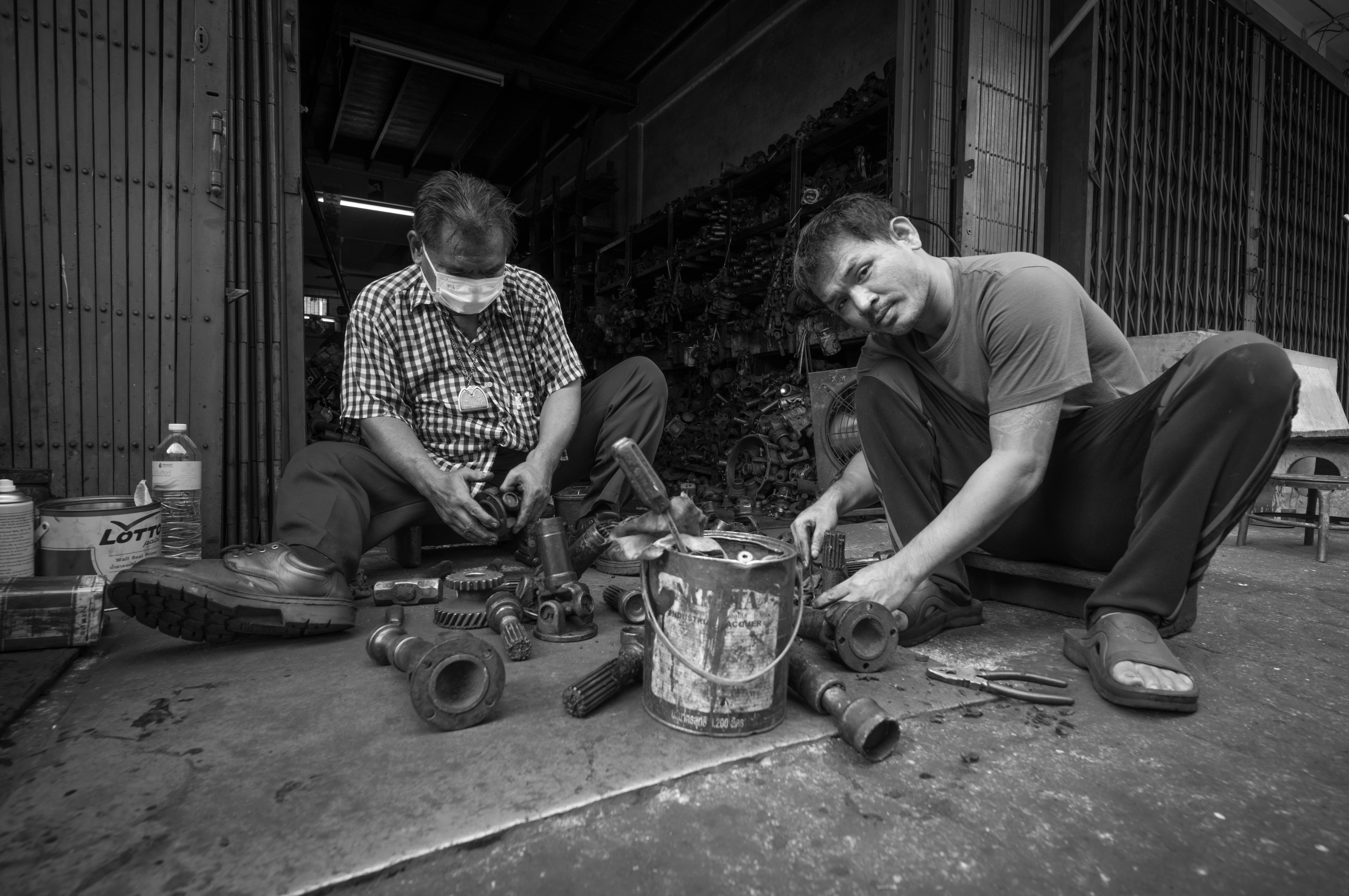
Last year, I spent over three weeks in Thailand, and one of my best discoveries was the Talat Noi neighborhood in Bangkok — a place where history and tradition blend beautifully with emerging trends. I had my
Leica M11 Monochromin hand and an 18mm Super-Elmar framing the world through my eyes.