
I am in Genoa today. Love this city.
It’s morning, a little after 7, I step out and quickly found myself leaning against the counter of Caffè del Duomo, on the corner of Vicolo di Chiabrera and Piazza San Lorenzo. It took just a few sips of a perfectly pulled espresso—served with the essential glass of cold water—to reconcile myself with the day.
Today, my companion is the my good German girlfriend Q343, one of my cameras. With “her”, I want to read what I call the Diary of Genoa.
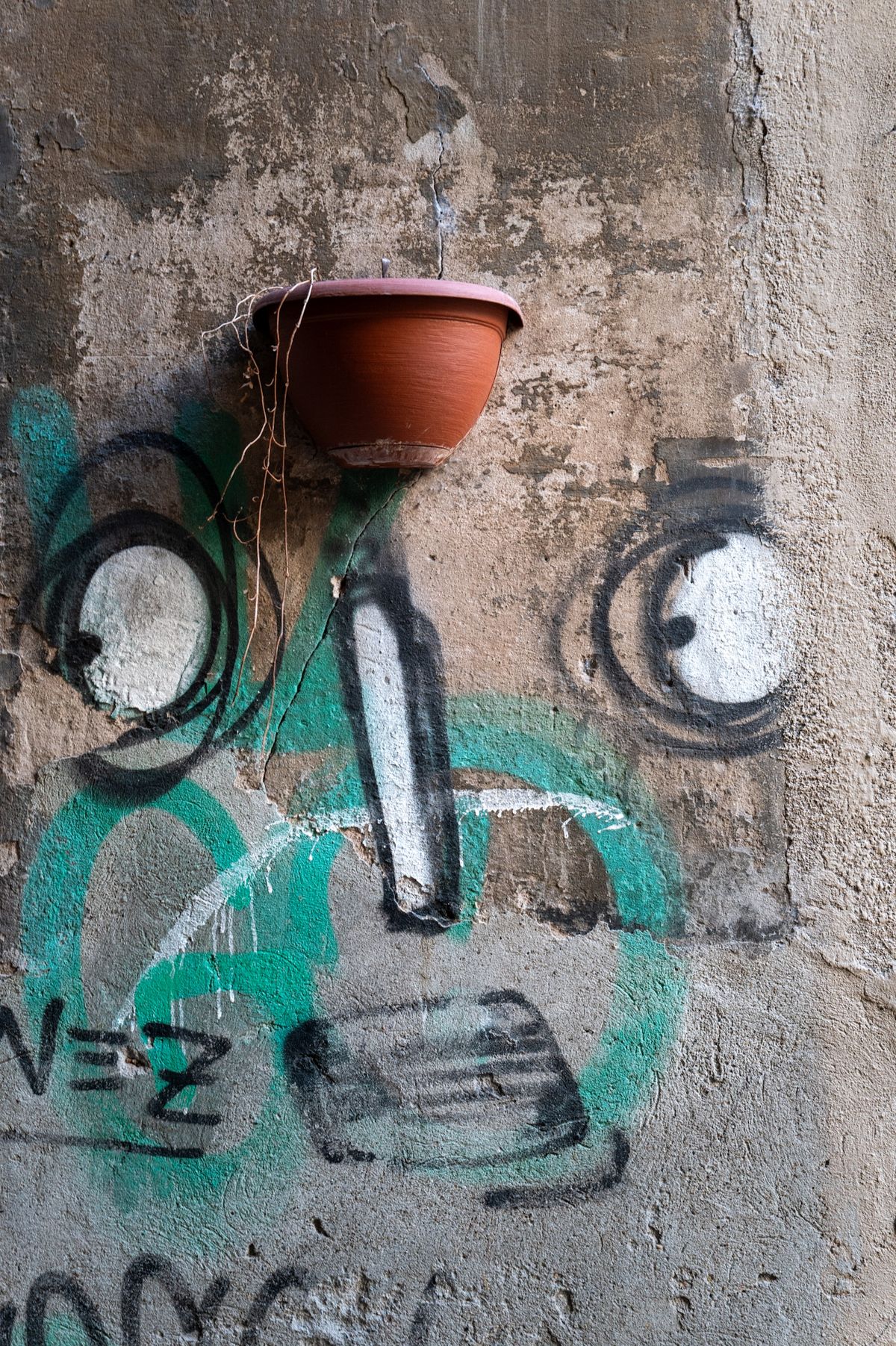
Walking through the città vecchia means navigating a maze of alleys where stone, brick and plaster hold centuries of stories. Alongside medieval doorways and noble palaces, new narratives unfold: graffiti, scribbles, posters, drawings, stencils.
These are layered and dynamic signs, sometimes intrusive, often fleeting—destined to be erased, rewritten, reshaped. And yet they turn the city into a vast gallery of expression, pulsing and spontaneous. A diary etched into the walls of the carruggi. Here, walls are no longer mere boundaries of architecture; they are pages on which an invisible community writes and rewrites its identity, its feelings, its anger, its humor.
This is a vertical city, built on slopes, with alleys that climb and crisscross in a labyrinth that mirrors its complex social and cultural fabric. In this scenario, the walls play leading roles: they support and divide, they channel and echo, broadcasting voices like countless radio stations you tune into with every step.
In these narrow passages, words and drawings hit with unusual force. A line scrawled in marker can be as powerful as a billboard elsewhere. Wander through the historic sestieri—Prè, Portoria, Molo, Maddalena, San Vincenzo, San Teodoro—and you’ll find everything: political slogans, soccer loyalties, improvised poetry, hearts and initials, quick sketches, spray-painted stencils.
Some leave declarations of love. Others claim rights. Others still jab with biting wit. Each wall tells a story, often ironic or defiant. Nothing is neatly categorized; everything blends, like the people here, into a multicultural, multi-hued galaxy few cities can match.
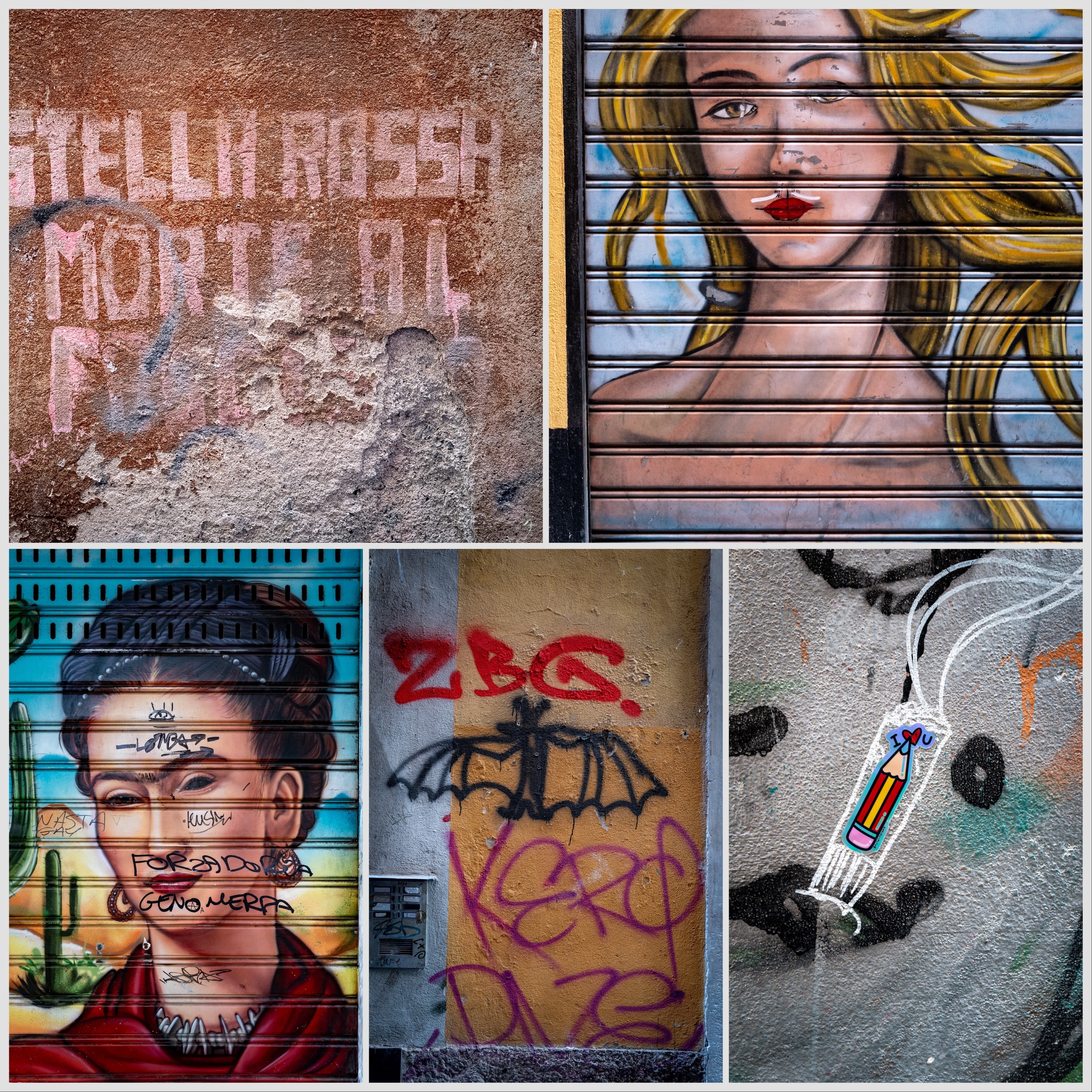
Graffiti-writing arrived in Genoa in the 1980s and ’90s, but traces go back further: wartime inscriptions still linger—warnings once meant for American soldiers after World War II, now faint but legible, nearly 80 years on.
Graffiti is often dismissed as vandalism, a rebellion against civic order. But with time it has taken on a more complex cultural weight. My camera today focuses on this raw language of the street—immediate, visceral, unfiltered—without neglecting the murals painted on shutters and shopfronts. It’s a wild mix, like a hard-edged rap track scrawled across plaster.
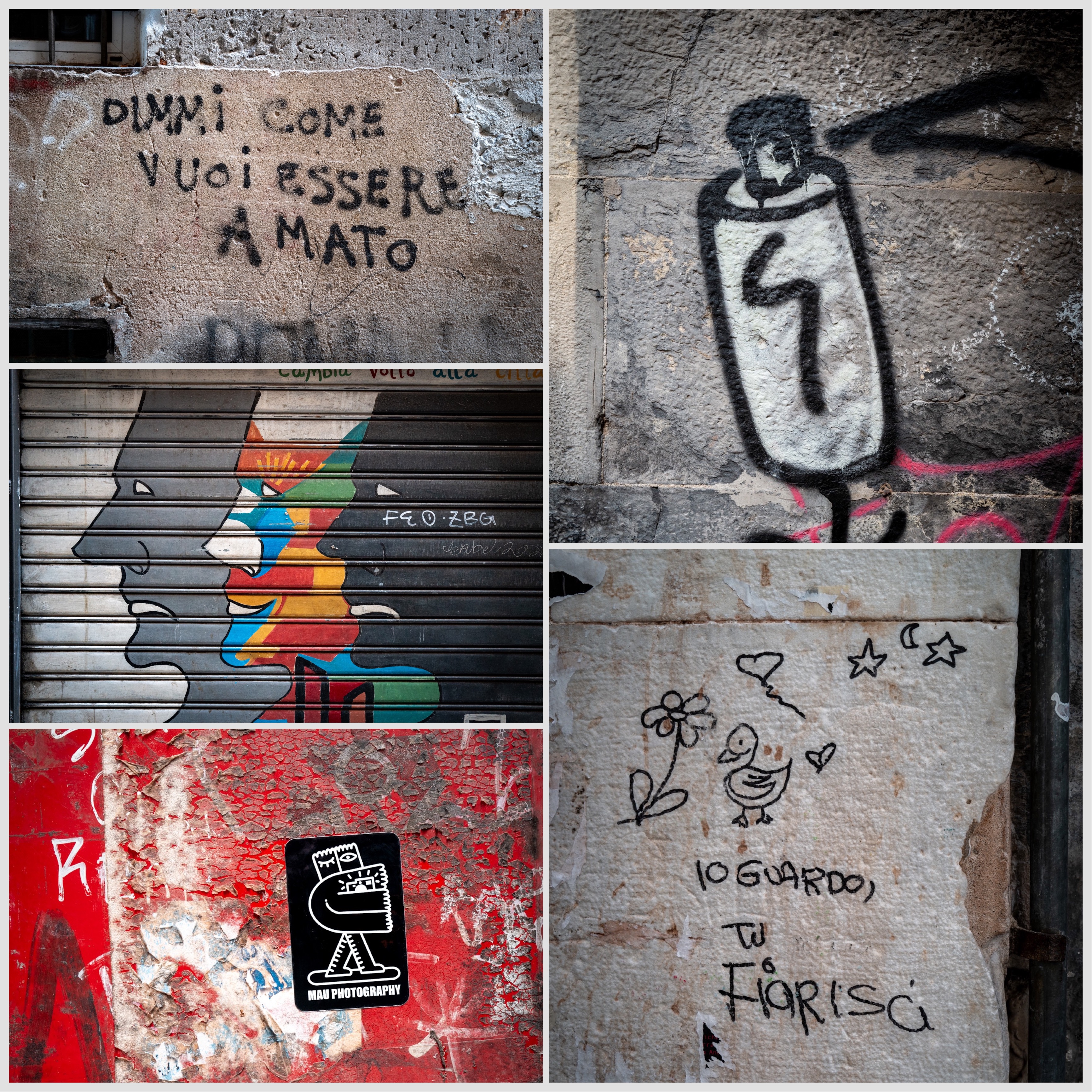
The drawings may catch the eye first, but Genoa’s walls are also crowded with quick lines in marker or spray: marginal notes left by an unseen community. Some are existential reflections. Others drip with sarcasm. Others still proclaim political allegiances or soccer loyalties.
Together, they form a collective diary of the city. An analog social network, slow but persistent. Each phrase lingers for weeks or months until painted over or replaced, but meanwhile becomes part of the urban experience. Passersby can’t ignore it: they look, read, smile, reflect, take photos, grow indignant.
In recent years, posters and collages have multiplied. Anonymous artists paste up illustrations, poetic lines, photographic cutouts. Others announce concerts, protests, calls to action. Small in size, direct in graphic punch, they too become part of the streetscape.
Paper is fragile. Rain warps it, hands tear it, time peels it away. But that impermanence is part of the charm. Genoa’s walls become palimpsests where sheets and stickers overlap, disintegrate, and morph into new images.
In the digital world, messages vanish with a swipe of the finger. Here, instead, the city is a living wall—an heir to the tazebao of decades past—where communication grows by accumulation, not erasure. No screen required: just raise your eyes.
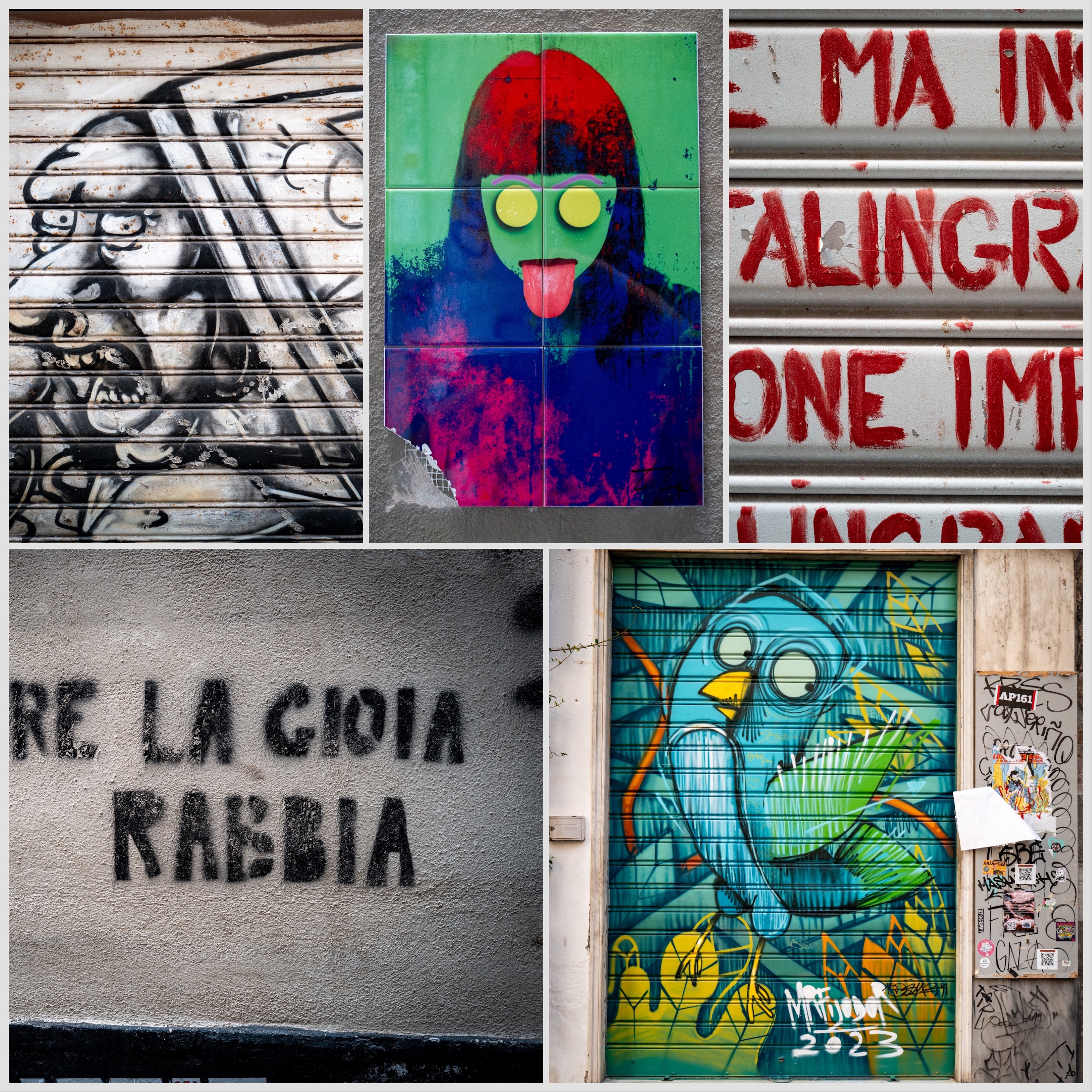
What emerges is raw and authentic: political tension, sporting passion, private longing, collective fear. The walls hold the frustrations of youth scribbling their rage, the poetry of those celebrating life in its light and shadows, the humor of someone leaving a surreal joke or cartoon.
In a city long shaped by economic hardship and social upheaval, the walls serve as a social barometer. They record moods, conflicts, hopes—because the wall itself is never static.
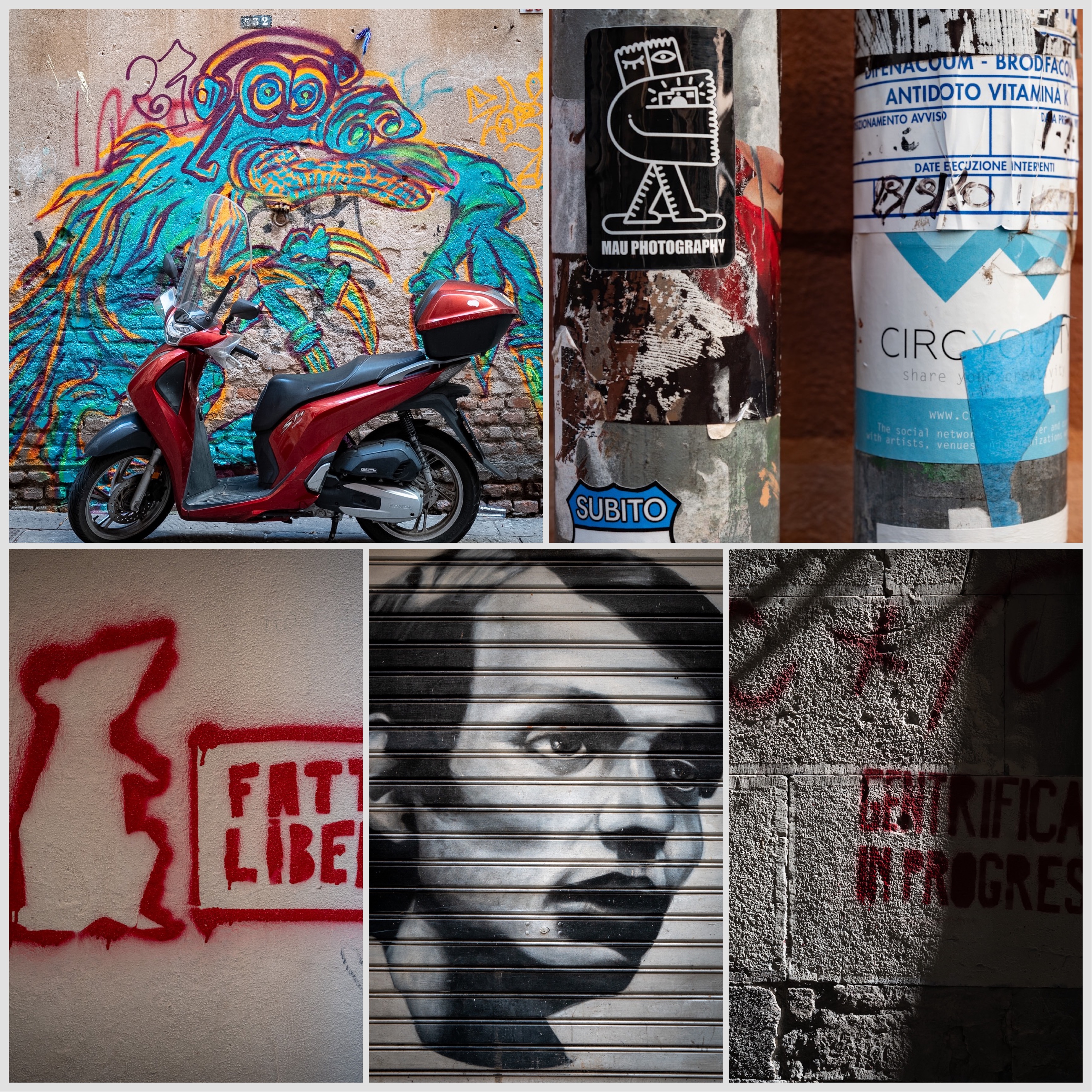
Yes, I admit: sometimes the line is crossed into pure vandalism. But if you can mentally filter out the crude scrawls, what remains is a sprawling gallery of communicative art.
Not a silent, orderly gallery, but a living, chaotic one, forever changing.
Each wall, each shutter, is a collective canvas. Each tag, a fragment of conversation. Each drawing, a creative act. This isn’t “high art,” but it is a cultural asset all the same—an intangible heritage that carries the voice of the street, a voice that would never find space inside a museum.
In Genoa, the walls speak. To listen is to understand the city, and those who live it.